
By Angie Larrea, Hempstead High School
and Gregory Valestin, Brooklyn Technical High School
Because Lorraine Woodward and her two sons have muscular dystrophy, they have always had troubles finding accessible vacation homes. Not wanting other families to experience those same difficulties, Woodward launched a website.
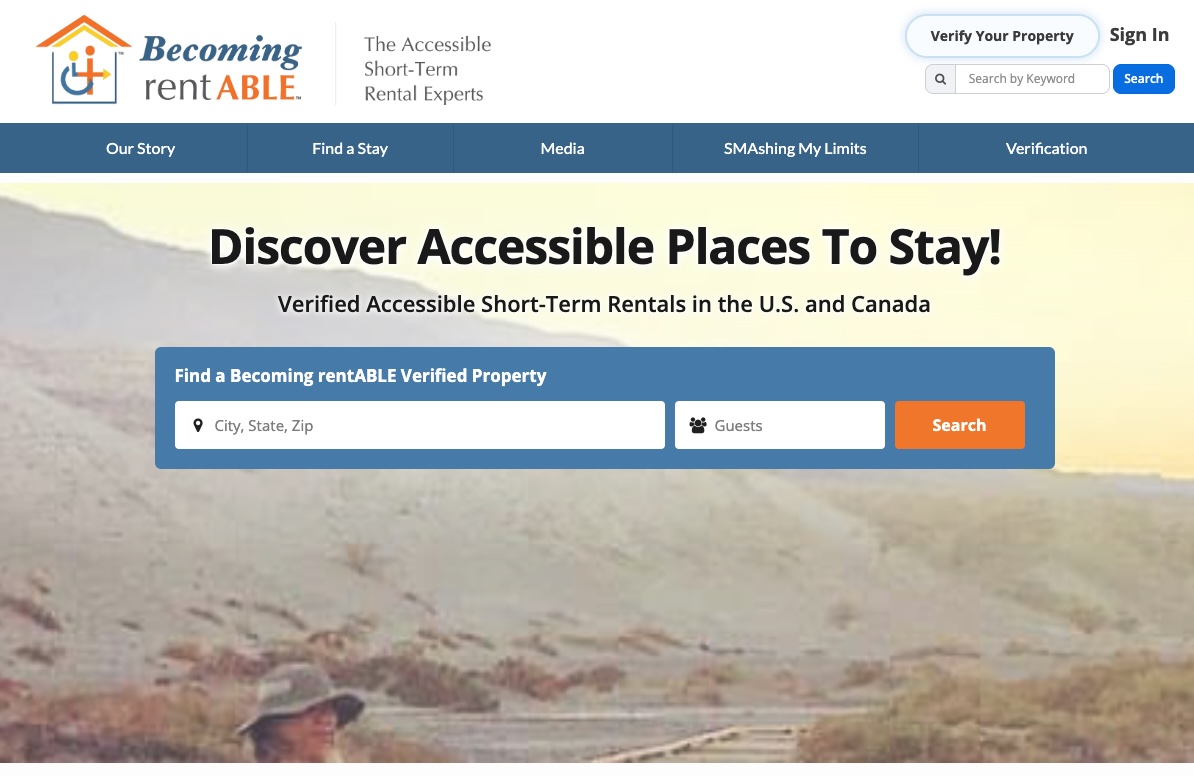
The website, Becoming rentABLE, lists short-term rental homes tailored to people with disabilities. On its website, it describes its goal as creating “a future where accessible short-term rentals are the standard, not the exception.”
“We want everyone to have the opportunity to travel,” said Woodward, 64, of Raleigh, North Carolina.
Muscular dystrophy is a hereditary condition that weakens muscles over time, and Woodward uses a wheelchair.
When she launched her business Becoming rentABLE five years ago, it was intended to make travel easier for people with disabilities by helping them find short-term vacation rentals.
According to the U.S. Centers for Disease Control, 28.7% of the US population has a disability. Despite the passage of the Americans With Disabilities Act in 1990, which mandates hotels to have accessible infrastructure, many rentals in the United States fail to meet the need for disabled tenants. According to a study titled “Enabling people with impairments to use Airbnb” by the Australian researchers Melanie Randle and Sara Dolnicar in the journal Science Direct, “People who use wheelchairs are especially exposed to obstacles, and consequently, are often excluded from experiencing and participating in tourism offerings.”
Becoming rentABLE lists more than 900 properties across the United States and Canada, including two in New York City. The listed homes have 63 different features, such as 36-inch doors, lower light switches, elevated toilets and hard-surface driveways. Woodward said she is expanding her business to accommodate people with hearing and sight loss in addition to cognitive disorders.
“Accessibility is more than wheelchairs,” she said. “We look at needs for people with crutches, walkers and cognitive disabilities like autism, dementia, depression and anxiety.”
“When you come to our site looking for an accessible place to stay, you identify your needs. They’re all different,” she continued. “You might need a hard‑surface driveway, a short ramp, grab bars in the bathroom or a property with a swimming pool.”
A common misunderstanding, according to Woodward, is that it costs more to rent a property with accessibility features. “It’s not necessarily more expensive,” she said.
Every home on Becoming rentABLE is verified by a paid team that examines the infrastructure. “I decided not to work alone,” Woodward said. “I brought together volunteers — 21 in total — for the first two years. Now I have paid team members.”
“It’s not something AI can do,” she said. “A human needs to look at the images submitted and validate what a property owner lists as accessible. Technology helps us organize the information, but verification is manual.”
Woodward said that there is a critical undersupply of accessible rentals in North America. “The short‑term rental industry also needs to change. Platforms like Vrbo have filters, but they’re vague — ‘wide doors,’ ‘wheelchair accessible.’ What does ‘wide’ mean? Thirty-two inches? Thirty-six?”
According to Woodward, many people give up and think they can’t travel.
“To create global change, we need industry‑wide filter improvements and better education,” she said.
With reporting by Yasmin Bardales and May Bar