
By Heily Sandoval
Northport High School
Do you want to know what a penguin eats?
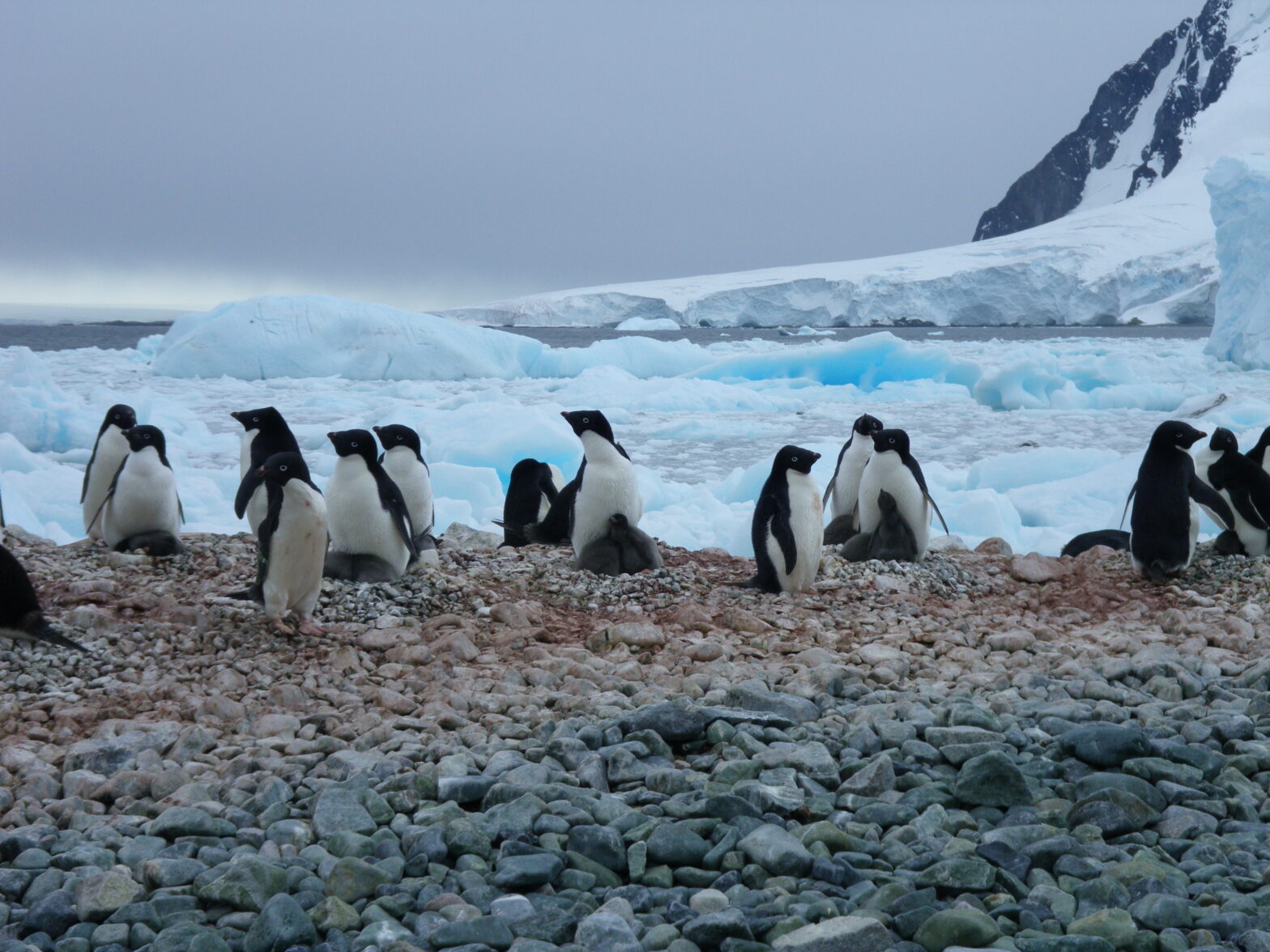
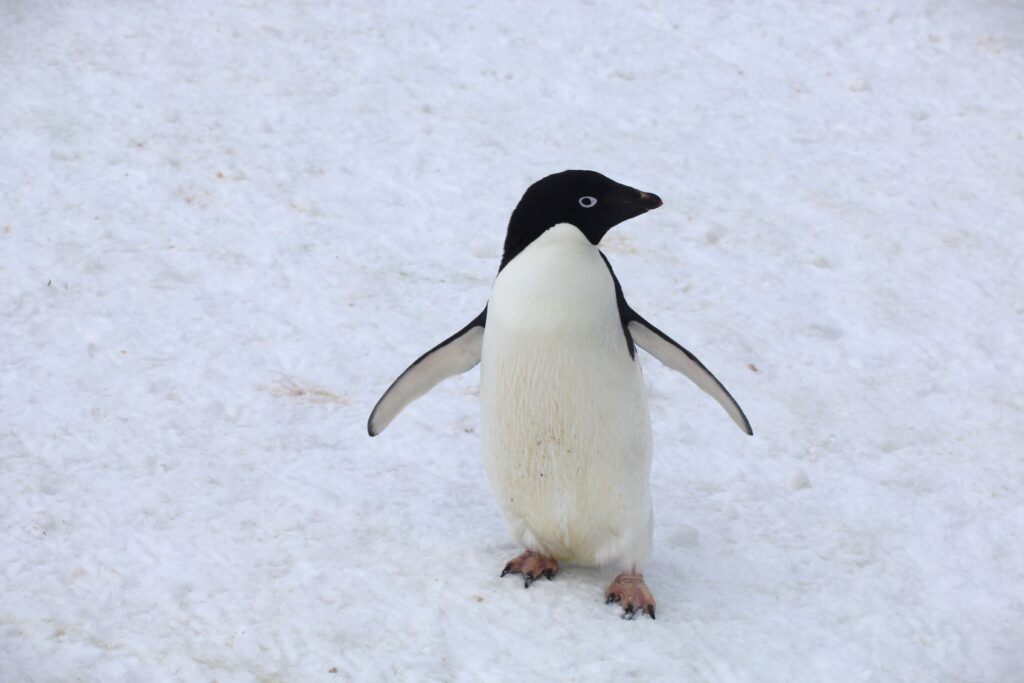
For a hint, you could ask six researchers who followed satellite images of an Adélie penguin colony across Antarctica going back nearly forty years from outer space. The team has found new information about the penguins’ food web by tracking their guano from space through satellite images.
The six researchers ― Casey Youngflesh, Christian Che-Castaldo, Mathew R. Schwaller, Michael J. Polito, Shawn P. Serbin, and Heather J. Lynch ― peeked at the colony for their article, “Space-based monitoring of penguin diet links sea ice, food webs, and population change.”
Lynch, a quantitative ecologist at Stony Brook University’s Institute for Advanced Computational Sciences (IACS), led the team. She has also conducted other research on penguins using satellites, which in fact, can also be used to study the weather or as communication devices.
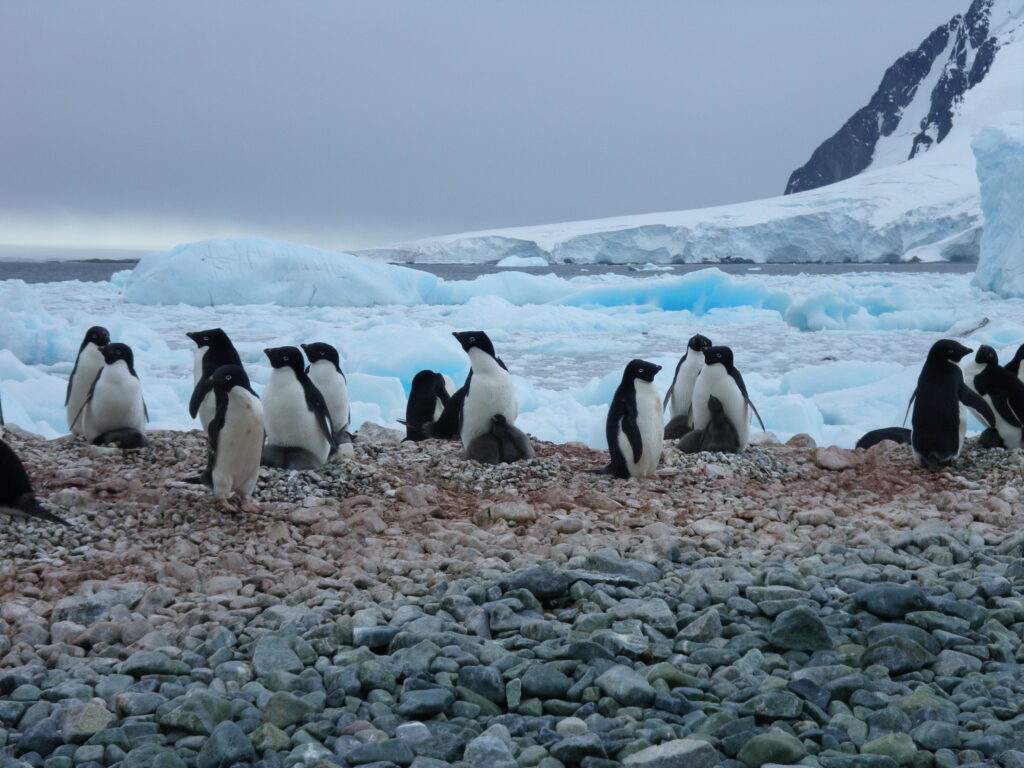
The researchers used satellite images to study the colony of Adélie penguins, and their guano, to understand what penguins digest in Antarctica.
The team members “wanted to understand how penguins’ diet varies over space and time and whether that’s important,” Youngflesh, an assistant professor at Clemson University in South Carolina, said in a phone interview. He conducts research in ecology, the study of the natural world.
The researchers found their idea to study penguin colonies and their diets through Schwaller, who has worked for the National Aeronautics and Space Administration (NASA).
Youngflesh said that Schwaller believed researchers could discover that a satellite could help them conduct their studies of penguins and their habitats in Antarctica and could get more information with an overview from space.
“I think it was the ‘90s at some point, [Schwaller] came up with this idea that you could look at penguin colonies from space, based on the color of their guano, their poop,” Youngflesh said. “He’d been thinking about this for a long time, but it wasn’t really until more recently where we had enough subtle information that we were able to actually monitor the entire species range across Antarctica using satellites.”
More than twenty years later, the team members continue to give credit to the satellite images, even though at the time, the satellites were not intended for that research.
“We started this study, raising satellite imagery, getting back to the mid-1980s,” Youngflesh said. “These satellites weren’t created to study penguins. They certainly weren’t created to look at the penguin diet, but we can actually use this in these ways that they were certainly not intended to be used … to do all sorts of cool science and understand how the natural world works.”
To complete their work, the team of researchers used the spectral signature — a way to measure color — of guano to determine what the penguins were eating. The team discovered the penguins were eating krill, which are small shrimp-like creatures, and the guano changed color depending on the krill species.
Most of the researchers watched from space, but Polito, who works for the University of California Santa Cruz, was on the ground among the penguins. He said in a phone interview that he endured chilly winds through his tent and the smell of the guano.
He and his team reached this conclusion in the article: “Rapid environmental change is reshaping Antarctic ecosystems through shifts in temperature and sea ice dynamics, with implications for species such as the iconic Adélie penguin.”
Alexandra Butuc, Christopher Cabrera, and Haru Dukanac contributed to this story.