Writing and Writing and Writing

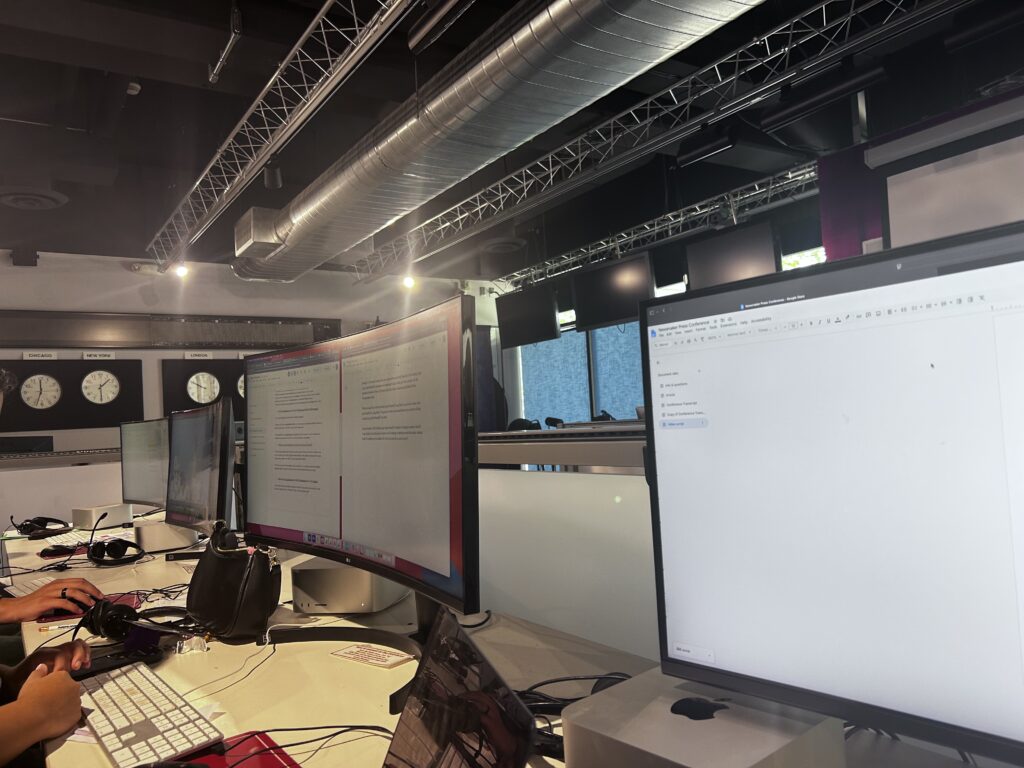
Greene Team at work in SBU’s newsroom, Thursday, July 30, courtesy of Allie Harrison/Greene Team

The Greene Team spent the majority of Thursday, July 30 writing and editing their two articles and creating their video piece. 

In the morning, we learned how to use iMovie, the program for putting together the video pieces. Additionally, the Greene Team engaged in a presentation on how to write for video and the differences between script writing versus article writing. Afterwards, it was time to get to work.

My team split the work between writing the video script and finishing the two articles we were assigned. I wrote most of the article on Tim Glotch’s press conference, while Izzy and Noah worked on the script for the corresponding video. Yennifer interviewed the final person for our article on the Keep Long Island Beautiful campaign, and together we worked on finishing that article as well. 

By the end of the day, the finish line was in sight. Friday, July 31 is the last day of the program — the last day to complete our assignments. With all of the writing and editing we accomplished today, I am confident we will meet that deadline.

-Allie Harrison, Ward Melville High School

For Noah Eichenholtz, journalism is just one of his interests

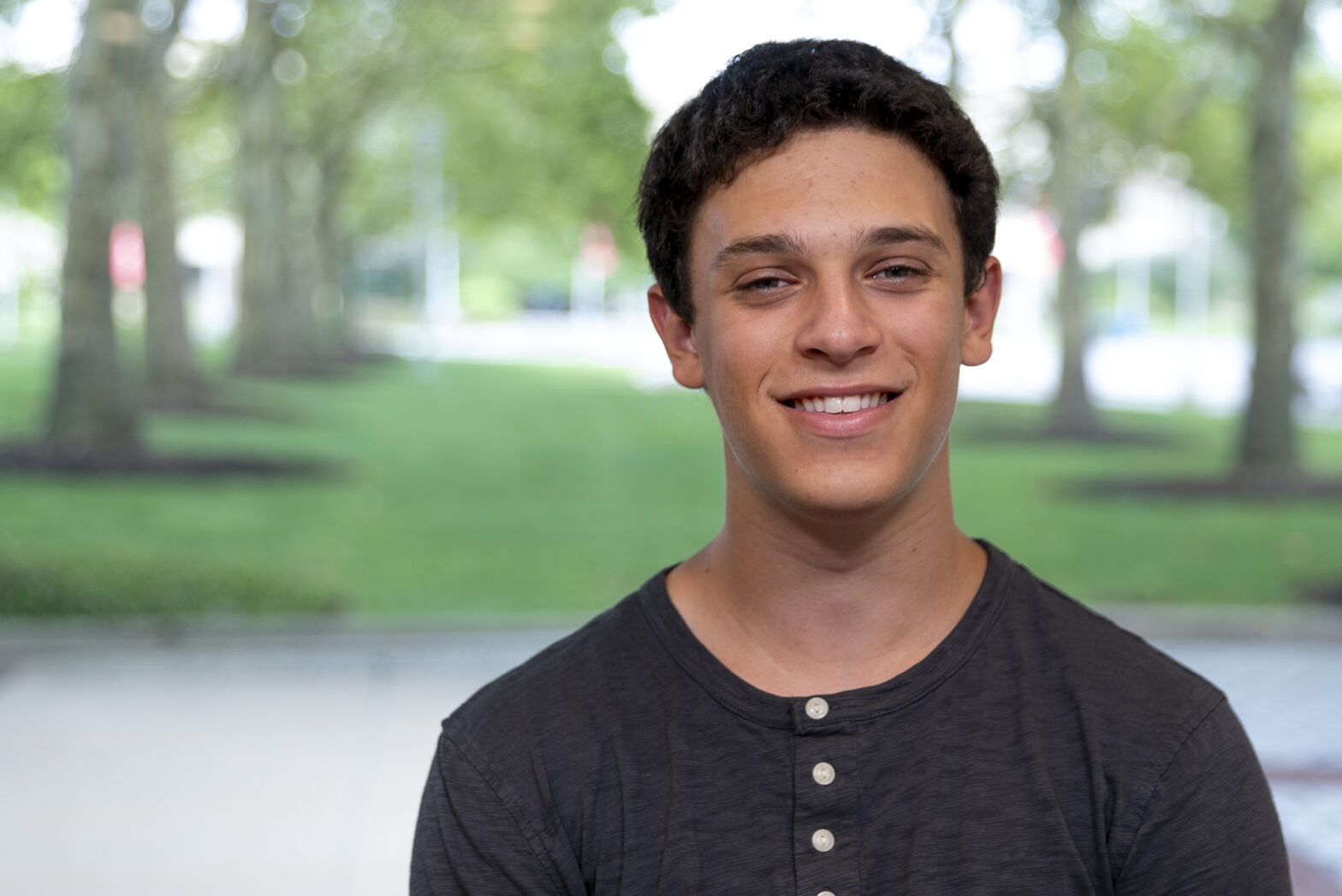
Noah Eichenholtz — Hendrick Hudson High School

By Allie Harrison
Ward Melville High School

Noah Eichenholtz has a wide variety of interests: working out, pop culture, history, and, of course, journalism.

The rising junior at Hendrick Hudson High School in Westchester was eager to join this year’s Robert W. Greene Summer Institute for High School Journalists.

Noah said that not only would the program be good preparation for college, but more importantly, he was excited about “getting to work with real journalists and seeing their views on the world.”

His passion for journalism is evident in his work for his school’s newspaper, The Anchor, where he is both managing editor and arts and entertainment editor. Noah said he enjoys writing about popular culture, from album reviews of “God Does Like Ugly” by JID and “MUSIC” by Playboi Carti to video game and movie recommendations. He is also involved in his school’s music culture club, where he discusses music with other students.

In addition to Noah’s commitment to journalism, he said he’s committed to exercise. The 16-year-old lives with his parents and 19-year-old twin brothers Simon and Miles, as well as a pet cat and a pet turtle.

He started working out seriously two years ago, and his family has always held similar values of health and fitness. “My father has been very big into working out and body building my whole life,” he explained, “and my mom also likes to work out, so my whole life, I’ve been surrounded by it. In high school, both my brothers began to get into it, and it became sort of a family thing.”

He said he enjoys the activity not only for the physical benefits but also for the mental and social aspects. “It’s somewhat therapeutic and allows me to work through emotions,” he said. “Besides that, it’s a fun activity I do with my friends and allows me to be in control of my body and health.”

Nonetheless, Noah does not plan to pursue either journalism or health and fitness as a career. Instead, he wants to be a history teacher. History is his favorite subject in school, and he’s very interested in politics.

He recently got to debate John A. Sarcone III, the first assistant U.S. attorney for the Northern District of New York, who was visiting his school for an assembly. Noah said it was “a lot of fun.” He added that he enjoys talking to people about politics “if they’re willing to actually think about it.”

Noah said he couldn’t wait to live on the Stony Brook University campus for the Greene Team.

“Noah is really passionate about a lot of things,” said his school friend Matthew Smith, “and with how much effort he puts into The Anchor, I can tell that journalism is something he really cares about. This program seems like a great opportunity for him to delve into that interest and learn more about it.”

As they say, journalism is the first draft of history — Noah is eager to help write it.

Breaking: Greene Team on TV

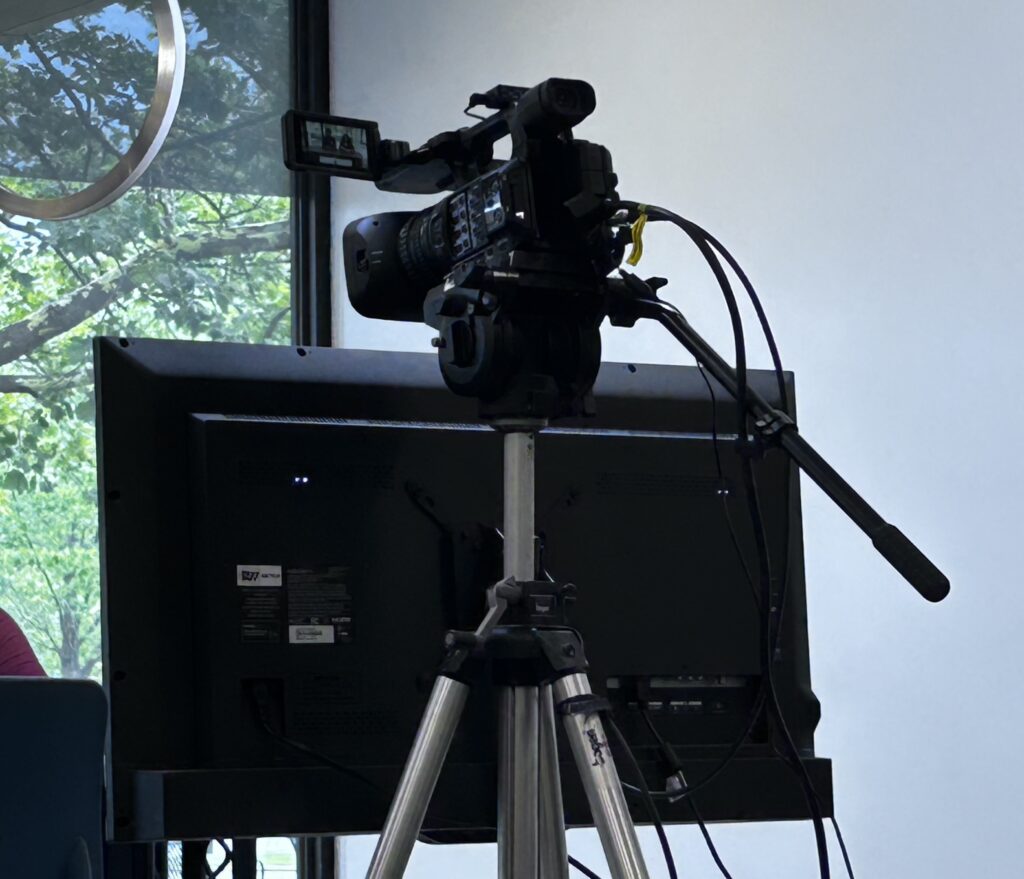
Camera setup for anchors. Allie Harrison/Greene Team, July 29

On Wednesday, July 29, the Greene Team had the chance to experience what it’s like to be live on television.

I started out as the control room director. That role involved cuing the anchors and reporters, as well as letting the video controller know when to cut to a different camera. Although that was fun, I enjoyed being a reporter even more.

I was a reporter in the next show, and this was the most exciting part for me. The camera had a teleprompter built in, so I could read my lines about the Greene Team’s activities yesterday and later today while also looking at the camera. Although I aspire to be a writer in my career, I know I would enjoy television reporting as well.

I may be somewhat of a quiet person in general, but talking to a camera or an audience feels comfortable for me nonetheless. I hope to get a similar experience in the future, and I am grateful to have had this one. 

—Allie Harrison, Ward Melville High School

Journalism: Changes past and present

The Greene Team began on Monday, July 27, with a captivating lecture by a journalist who reported on the 1970s Watergate scandal and witnessed the field of journalism evolve. 

Dini Diskin-Zimmerman, a broadcast journalist who has been in the field for decades, spoke to the group about her wealth of experience in a changing — yet also constant — profession. 

She told about how in the past, news stations used two-inch tape to record, and they manually cut out pieces to edit them. Now, we use computers for the same task. Before, the cameras and lights were enormous, but now, they are small and compact. However, the way news is reported hasn’t changed one bit. Good reporters still strive to remain unbiased, they still state the most important things first, and they still have the constant role of updating the public on the occurrences of the world.

Zimmerman also shared another part of her interesting past with the Greene Team: she was a crucial part of increasing women’s equality in the workplace. When she started out at one of her earliest jobs, she was the only woman there, among a host of white men. They needed to hire women to support DEI, and she not only fit that requirement, but she was exceptionally good at reporting. Throughout her career, more and more women started working with her.

Later on, George Giokas delivered a presentation on the immense importance of local and school newspapers.

Giokas told the group that three quarters of those in New York City don’t have newspapers, which is problematic because students don’t get information about their communities, and young writers aren’t exposed to this vital profession.

Additionally, there has been a large decline in local newspapers throughout the country. In the past 20 years, the nation has lost approximately 3,500 newspapers. Now, over 210 counties have no local news sources at all.

Chart showing counties with limited local news. Allie Harrison/Greene Team, July 27

News sources are essential for public information and even participation. In fact, fewer people tend to vote when they lack newspapers. Thankfully, Long Island still has over 150 community newspapers, which serve mainly on the village level.

As Giokas put it, “You lose your identity when you lose your local newspaper.” That is why journalism is essential, and the Greene Team plans to make a contribution to it.

—Allie Harrison, Ward Melville High School

Stepping onto the Stony Brook campus

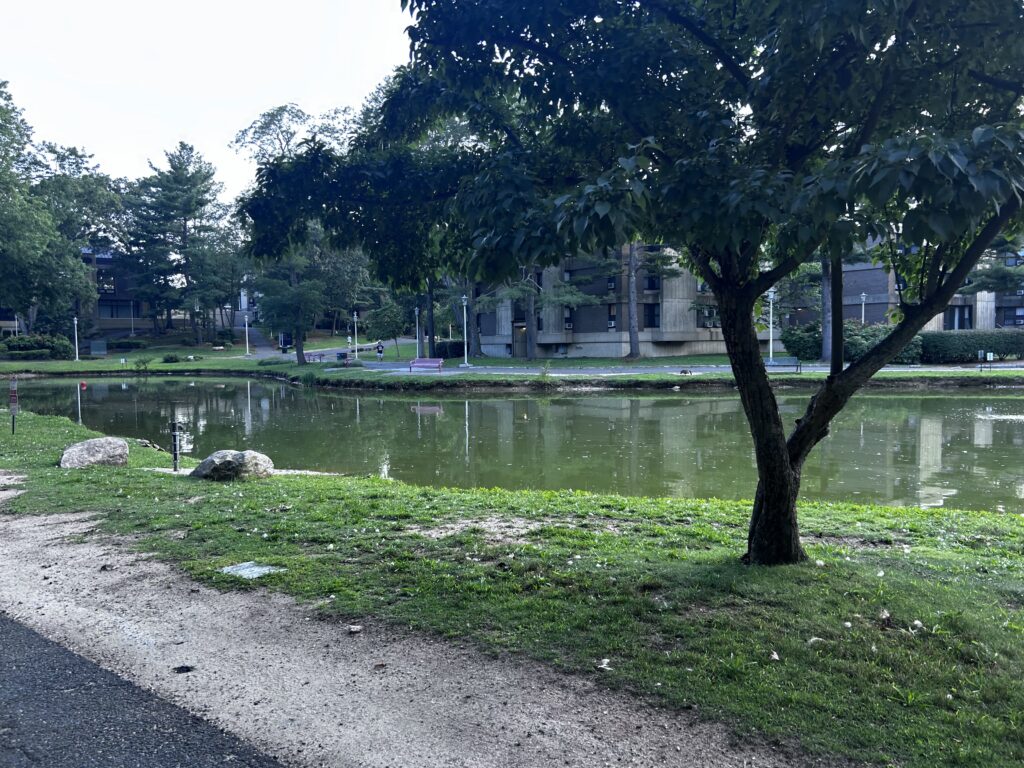
Pond at Roth Quad, July 26. Photo by Allie Harrison/Greene Team

Sunday, July 26, was the first day of the 2026 Robert W. Greene Summer Institute for High School Journalism program. It was also the first time I’ve visited Stony Brook University’s campus, despite living only 15 minutes away. 

My first impression was certainly a positive one. Right next to Hendrix Hall, where the dorms are located, is a scenic pond with ducks and geese. Throughout the campus, green spaces with vibrant trees and plants abound. A stone-paved path between buildings leads to a glistening water fountain. All of these details seem to give Stony Brook a feeling of being surrounded by nature, despite being situated near a busier town. 

Walking around campus was pleasant, but will hardly be the most exciting experience of the program. Writing, learning, and exploring activities are soon to come!

—Allie Harrison, Ward Melville High School