Kayci Guardado: Journalism passion found through a  computer class

By Yennifer Soriano 
Hempstead High School

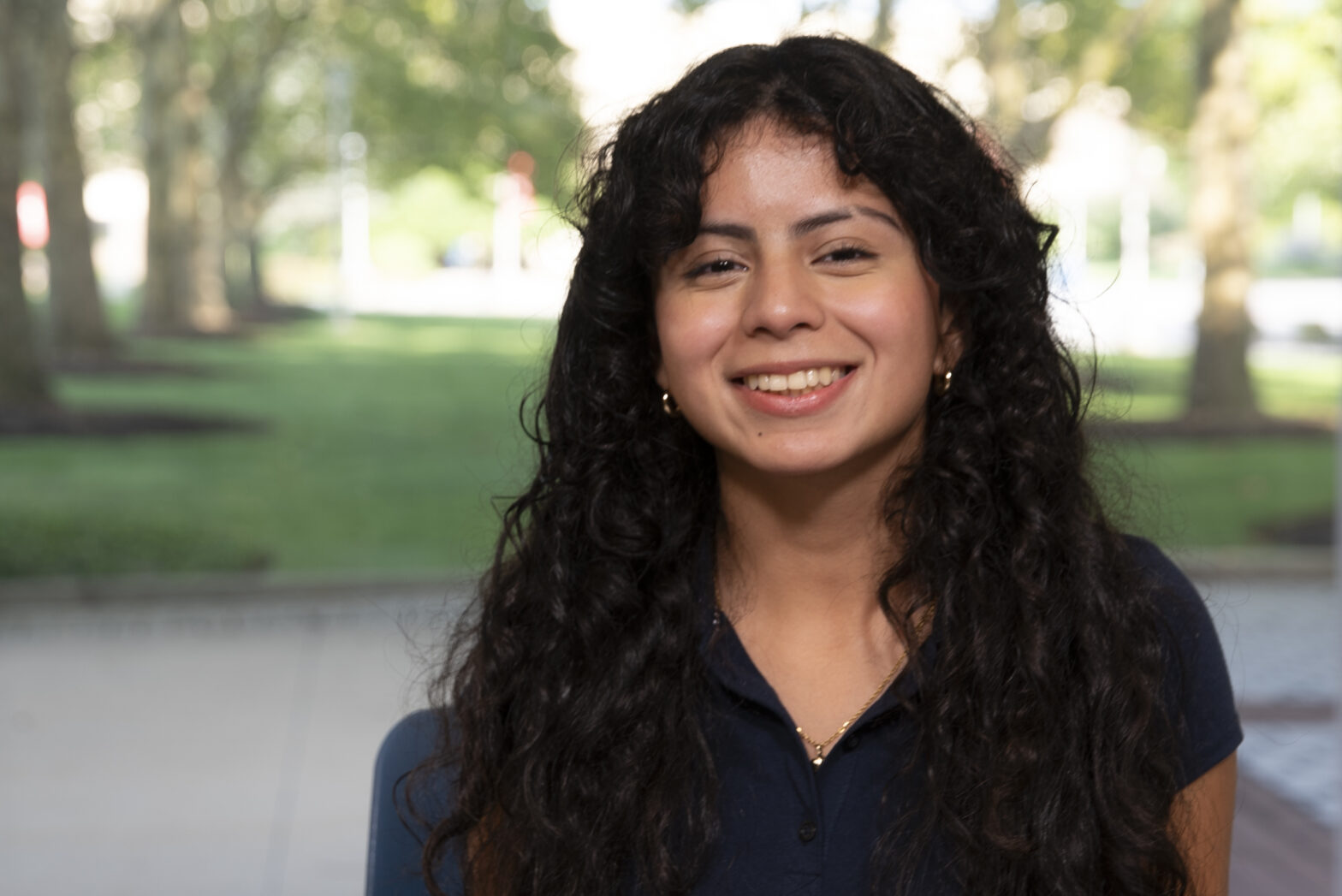
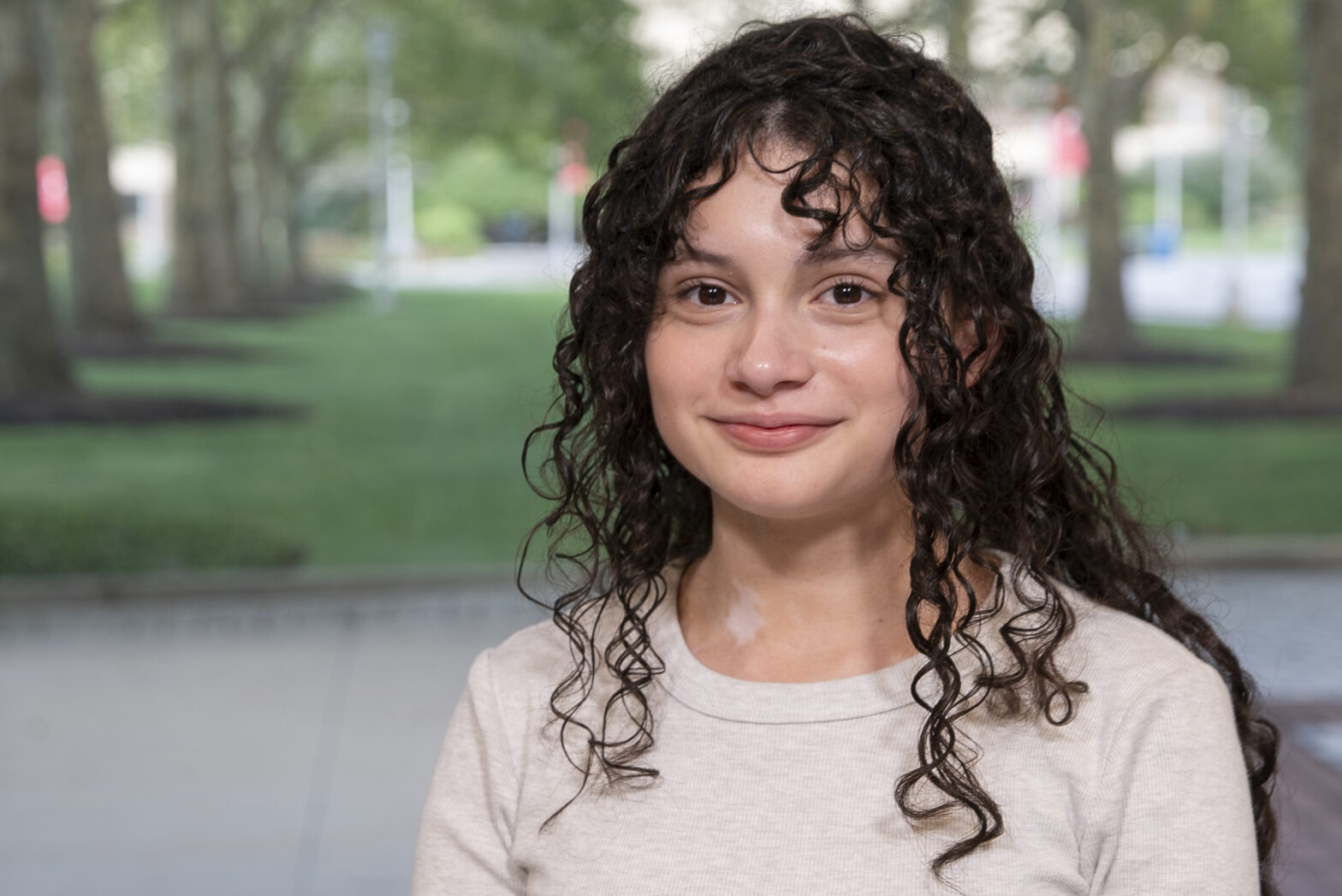
Every student has a busy schedule, but Kayci Guardado is exceptionally busy with her athletic and journalism journey.

Guardado, a rising junior at Central Islip High School, lives with her mother, father and older sister. Her other older siblings have moved out.

With a passion for school sports, Kayci participates in cross country, spring track and winter wrestling. 

The achievement she is most proud of is when she surpassed her old best time of seven minutes and six seconds in the 1,500-meter run. “I finally was able to break my personal record with six minutes and 47 seconds, even though I broke both ankles this year,” she said.

Besides sports, Kayci is in the newspaper club, and is a member of the computer science honor society.

Her friend Katheryne Guzman Alvarez describes Kayci as passionate about anything she gets into, and as “a smart and shy person.”

“Once someone gets to know her and she starts to feel comfortable around them, she shows her personality and she is a great person to be around,” Katheryne said. 

Kayci is a risk-taker, taking on challenges no matter how much of a struggle they could be for her. She described one of them: joining the male-dominated wrestling team in eighth grade without knowing much about wrestling. “I still took that risk of being one of the only girls that joined wrestling and [are] trying it out.” 

Kayci describes herself as an ardent feminist, having attended programs with Planned Parenthood about anti-abortion laws being passed.

She has also found a passion for journalism, beginning with her computer journalism class and then joining the newspaper club. “I’m like the one that has posted the most on our newspaper app with maybe like ten articles,” she said.

“My teacher [Rahana Schmalacker] told me my papers were good,” Kayci said. “She was definitely one of my motivations to keep writing.”

Schmalacker introduced her to the Robert W. Greene Summer Institute for High School Journalists. 

“I honestly don’t know if I want to pursue physical therapy, computer science-related or media careers, but I hope I can figure it out through this program,” Kayci said. “I feel like this will give me a taste of what journalism is really like.”

Stony Brook’s new pediatric ER department to cost $55 million

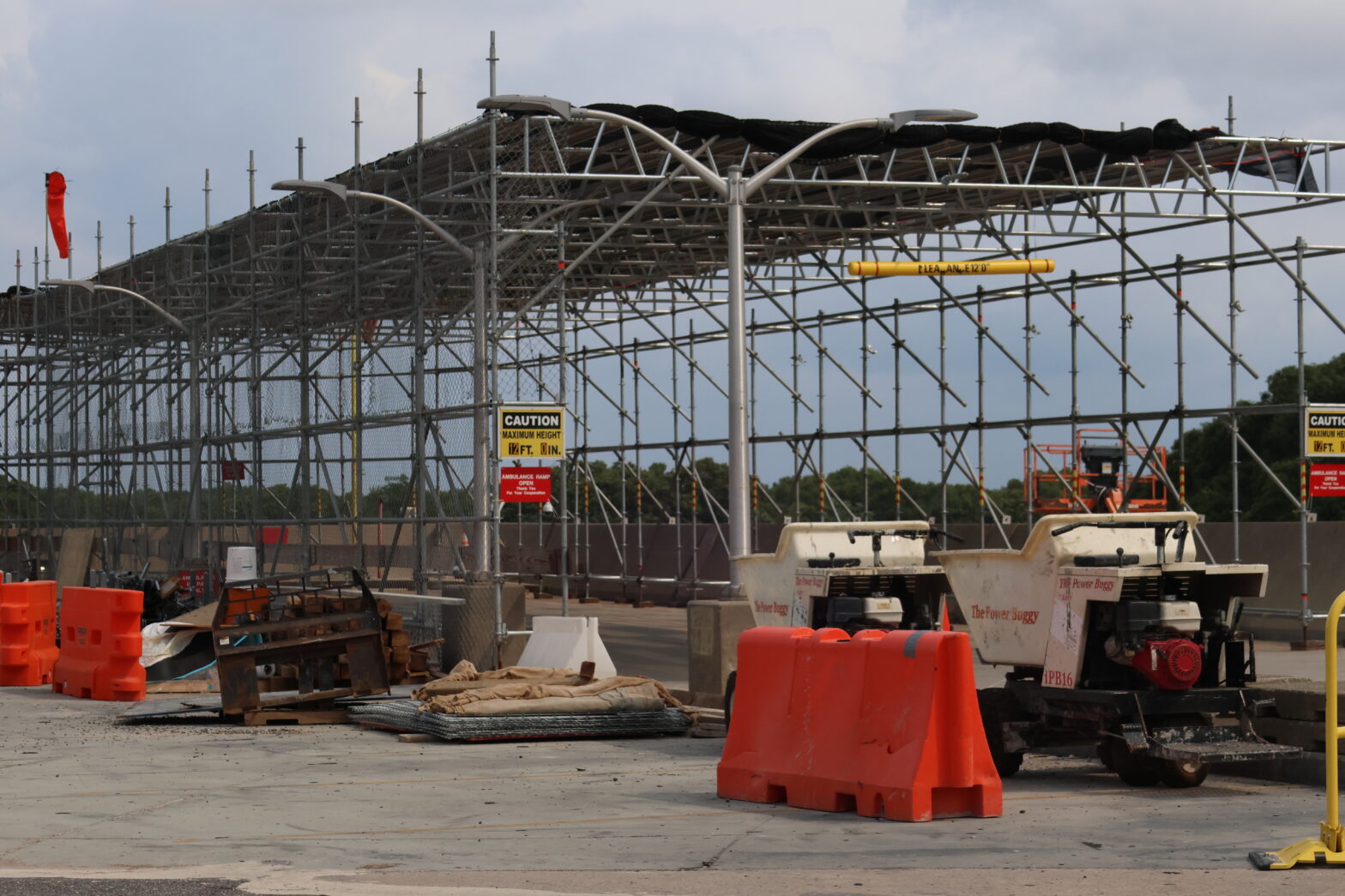
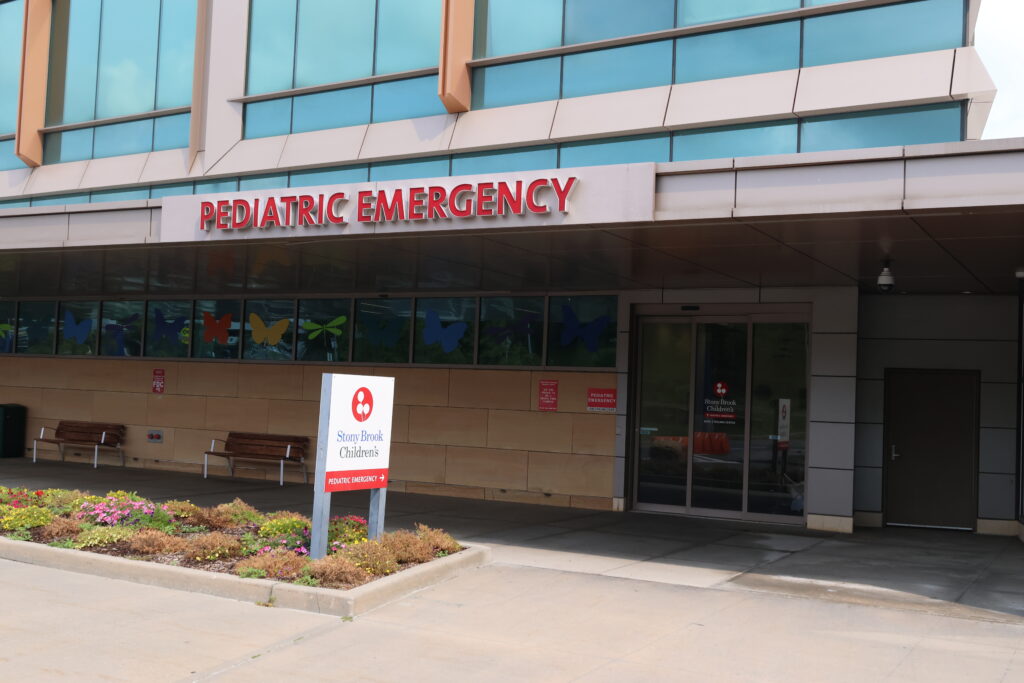
Construction is under way at Stony Brook’s pediatric emergency department. Myles Darby/Greene Team, July 28

By Kayci Guardado
Central Islip High School

Stony Brook Children’s Hospital is trading overcrowded hallways for specialized trauma bays, breaking ground on a $55 million expansion built to handle a historic surge in pediatric emergencies.

According to Stony Brook Medicine officials, the hospital, especially its emergency pediatric unit, has experienced a steady rise in patient volume, from 19,000 visits in 2014 to more than 27,000 in 2025, with a spike during flu season. 

“This project has been in evolution for almost a decade now,” said Dr. Carl P Kaplan, associate professor of emergency medicine and pediatrics at Stony Brook.

Kaplan said a pediatric ER department should ideally have one room for roughly every 1,500 children seen per year. “We don’t have that now. We need that.” 

Sometimes, he said, overcrowding means that doctors examine patients in the hallways, which comes with privacy concerns and medical situations that require special equipment or sterile fields. He said this is just another reason why the project is needed.

Architectural renderings show the expansion will quadruple the space of the current facility, scaling it up from 4,20-square-feet to over 17,000-square-feet. To keep in line with the aesthetic of the main children’s hospital, the theme of the new emergency department will be nautical. The waiting room will look like a sandbar, the fast track a tide pool, and the back end a deep sea. With each transition between rooms will come different kinds of artwork and sculptures.

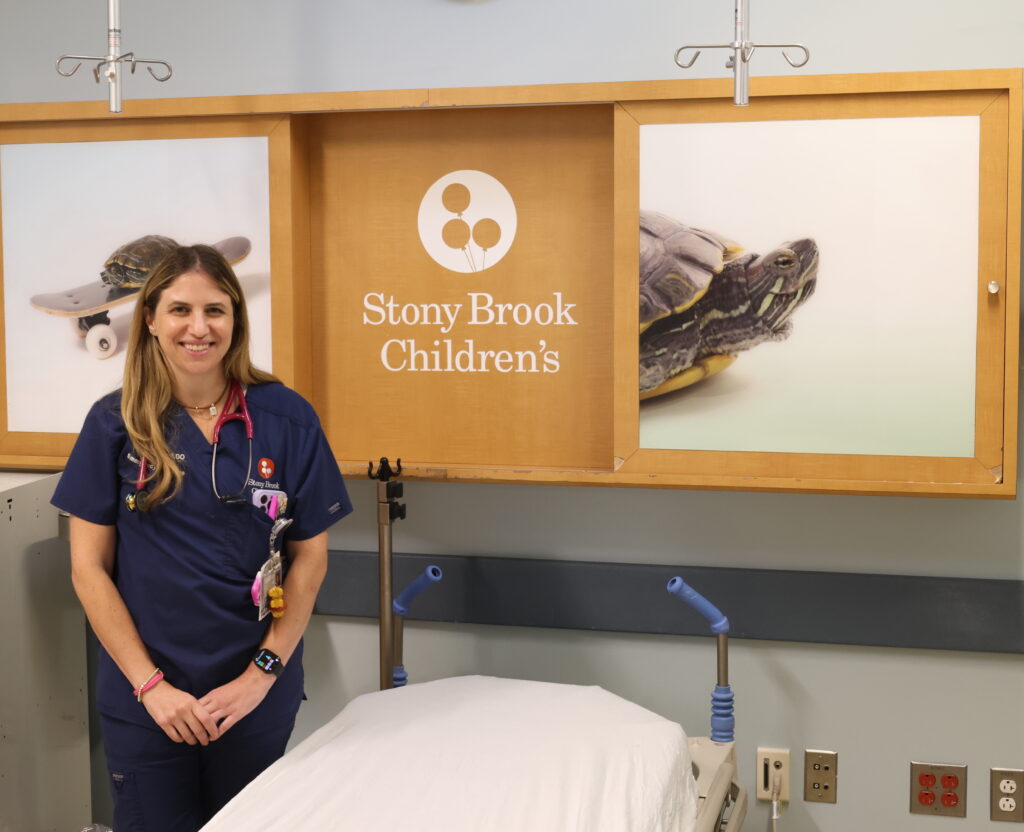
Dr. Jessica Miller Mantell, a clinical assistant professor in pediatrics who has been with the hospital for five years, said she is excited about having innovative medical tools and their own specialized trauma base. “Those will be all new units geared towards kids,” Mantell said. “And there will also be new rooms with a faster flow to allow us to see kids quicker and easier.” 

Dr. Jessica Miller Mantell is a pediatric ER physician at Stony Brook Children’s Hospital. Myles Darby/Greene Team, July 28

Kaplan said the motivation for the construction came from hospital leadership, including Chief Executive Officer Carol Gomes and Department of Pediatrics chair Dr. Carolyn Milana. “We started planning it, actively, approximately two years ago. 
And we were trying to design a unit that is child-friendly,” noted Kaplan. “That is going to be a place where we can practice state-of-the-art medicine, and where we can train the next generation of residents and fellows, to practice pediatric arts medicine.” 

Hospital officials said the expansion will cost $55 million, with $21 million of that coming from nearly 200 donors.

Site work began in the fall of 2025, and the full project is scheduled to be completed by 2029. The construction is broken into two distinct phases. 

”In the first phase, they’re building a brand-new building adjacent to the emergency department in a parking lot, which is currently closed for construction … Following the completion of that, we will move into that area, and then the current physical plant that we’re in now will be remodeled into a fast-track area,” Kaplan said. 

He also said the construction will not impact the hospital’s daily medical workflow until the first phase is completed, at which point the team will remodel the layout.

Mantell added that the day-to-day changes have been minor. “The other day, I thought a helicopter was landing with a patient, but it turns out you can just hear the drilling.”

The two doctors agreed it’s an exciting community innovation. “As we continue to grow and expand, we’ll be able to advocate for kids more and give even better care,” Mantell said.

With reporting by Asher Squires and Myles Darby

Official say Stony Brook’s current pediatric ER department is undersized for the number of patients it sees. Myles Darby/Greene Team, July 28

Stony Brook professor selected for NASA’s Artemis research team

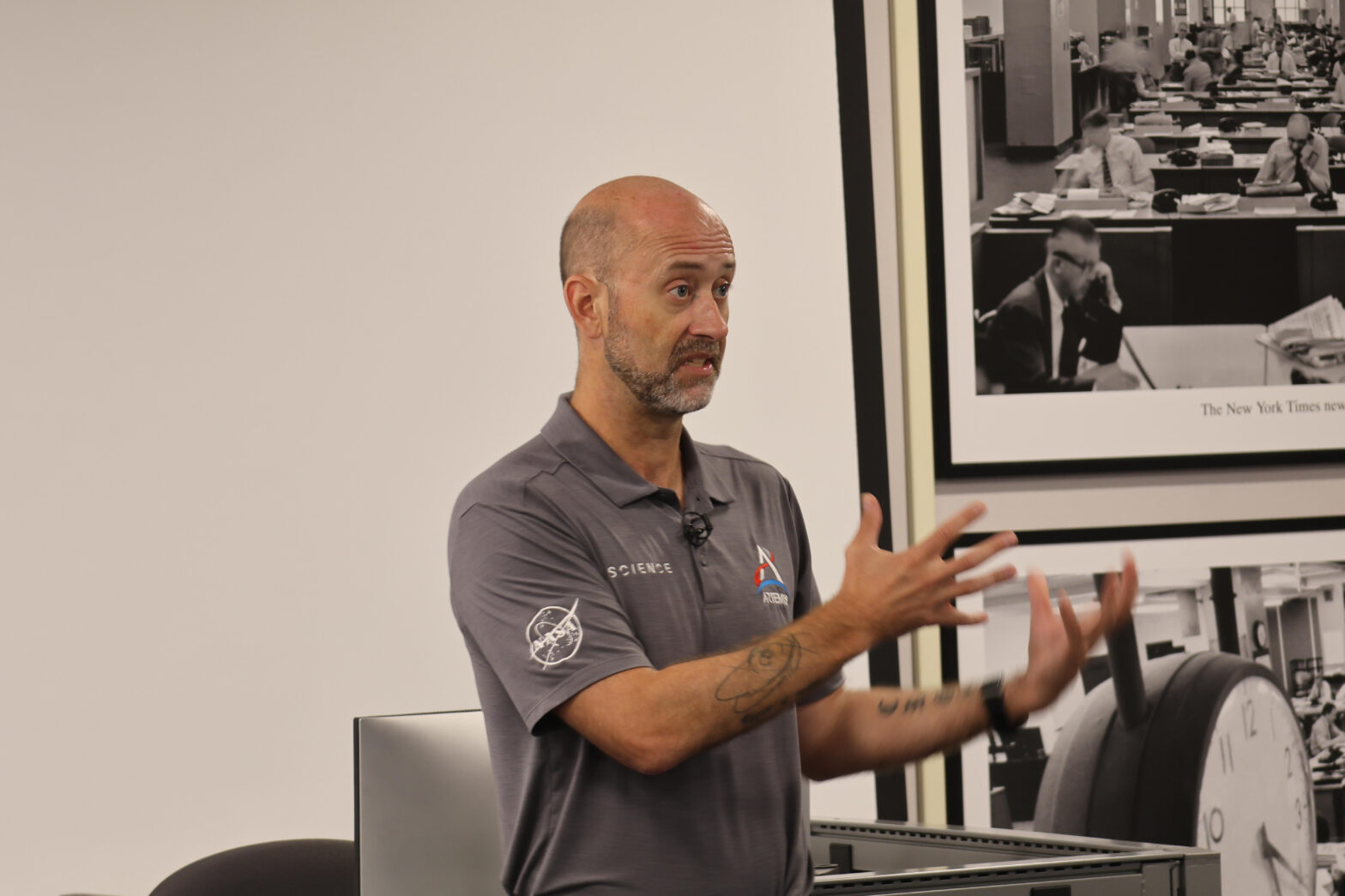
Tim Glotch, Ph.D., speaking at a press conference at Stony Brook University on July 29, 2026. Noah Eichenholtz/Greene Team

By Allie Harrison, Ward Melville High School
and Yennifer Soriano, Hempstead High School

When one thinks of exploring the moon, they might think of a NASA control room or astronauts planting a flag in the ground, but space exploration is so much more than that. 

Planetary geologist and Stony Brook University professor Tim Glotch, Ph.D., spoke about his work on NASA’s new Artemis IV team on July 29, which will help us learn not only about the moon, but about Earth as well.

Artemis IV will transport astronauts to the moon for the first time in over 50 years. Ever since the Apollo missions first brought people to the lunar surface, there have been satellites and rovers but never crewed landings. However, with the mission scheduled for 2028, this is all about to change. The four astronauts will collect samples for geologists like Glotch to study. These studies can be used to learn about how the rocks on the moon — and on Earth — form.

“The selected scientists will bring a wealth of expertise to this team to ensure we are supporting crews on the Moon to achieve the missions’ science objectives,” Joel Kearns, deputy associate administrator for exploration in NASA’s Science Mission Directorate in Washington, said in an announcement. “Exploring the lunar surface and executing the U.S.’s science objectives is a major step toward sustained operations at the Moon and preparation for human exploration of Mars.”

When asked about how trips to the moon will help us learn about Earth’s history, Glotch’s answer was simple — rocks. “We have these very, very old rocks from the moon that are much older than anything we have on Earth,” he says. “And because the moon and the earth formed basically at the same time and right next to each other … the moon, those ancient moon rocks, record processes that would have happened on Earth at around the same time.”

On Earth, tectonic plate movements destroyed those similar rocks long ago. However, the moon lacks these tectonic plates, leaving the samples intact. The more lunar samples NASA can obtain from these Artemis missions, the more scientists can learn.

Glotch and other geologists are also involved in figuring out where exactly on the moon Artemis IV should land. Because of the potential for finding water, he said, they know that the landing point should be near the moon’s south pole. Craters in this area are extremely cold — some of them only about 12 degrees above absolute zero. So whenever comets or other objects bring water to these areas, it freezes and remains there. If scientists ever wanted to remain on the moon for longer periods of time, the presence of water would “make it cheaper, more affordable, and more sustainable,” according to Glotch. 

When it comes to how scientists even gather all of this information initially, the answer is a process called infrared spectroscopy. This uses infrared light, which has wavelengths longer than those the human eye can see.

“It turns out you can use infrared almost like a fingerprinting technique. Every rock, every mineral, has its own infrared spectral signature,” Glotch said. “We can basically zap rocks with the red light and look at the reflected light, where we can look at the emitted infrared light from hot rocks and figure out what they’re made of.”

Just like any profession, Glotch’s work is not without its challenges. Obtaining funding for projects is a difficult and competitive process. “When we write proposals, sometimes you think you have an awesome idea, and people don’t agree with you,” he says. In that case, he would have to write another proposal to re-argue his case with the hope that the project would then get approval. 

Despite this struggle, Glotch said, the Artemis missions will go on. After the 2028 operation is complete, he and his colleagues will have material to study to learn about not only outer space, but the Earth as well.

With reporting by Isabella Davis and Noah Eichenholtz