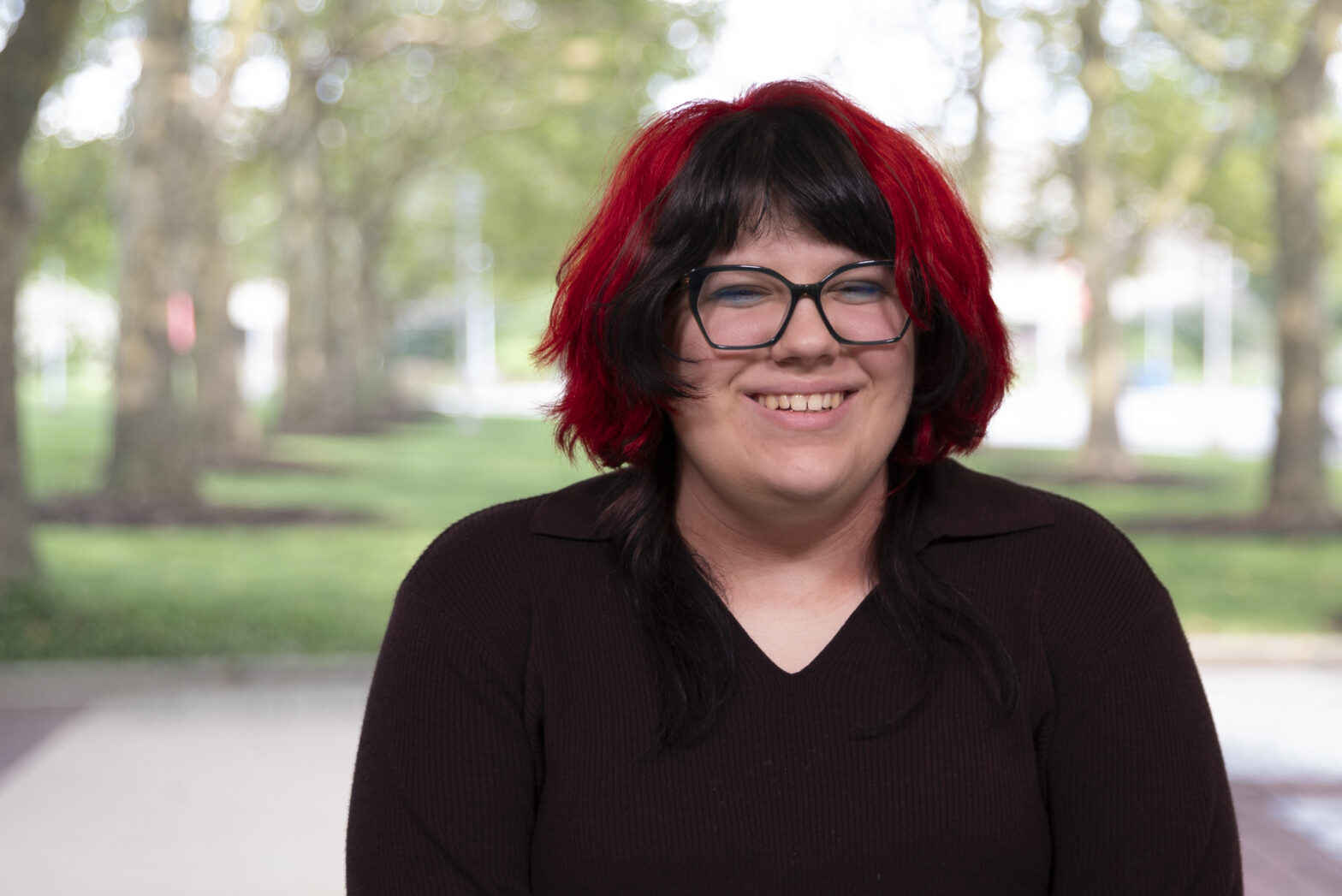
Asher Squires: Approaching journalism through poetry

Asher Squires — Miller Place High School

By Christopher Cabrera
Brentwood High School

When Asher Squires applied to the Greene Team, they saw it as an opportunity for a writing experience. 

Asher sees themselves more as a creative writer than a journalist.

They grew up in Sound Beach with their older brother, Noah, and their parents, Lorraine and Matt Squires.

They currently attend Miller Place High School, where they engage with all sorts of media, including books like House of Leaves, music from artists like My Chemical Romance, and games such as Undertale, which have helped them explore different creative mediums.

 Asher loves attending concerts and volunteering in the backstage crew at Theatre Three in Port Jefferson, where they gain knowledge and experience with the work involved in the creation process while also getting to socialize and directly bond and build connections in a team effort. 

It’s their personality that draws cooperation. “Asher always has this charm-power,” says Fei Shi-Zhong, one of Asher’s “best buddies.” “They are able to literally lighten any room they enter. They always know what to say, what to do, and the entire mood just shifts.” She said that she is “forever grateful that I’ve got to meet such an incredible individual.”

Poetry has been Asher’s main outlet of expression. “I love poetry and making people feel things with my writing,” they said. They take classes every Saturday and use their free time to write pieces and even submit them for contests.

Support from their teacher and mom has pushed Asher to advance. Their mom, as a librarian, has motivated Asher to engage in literary works. “My English teacher once told me ‘You have a very good writing voice’ and I think about it every time I write,” Asher said.

Their teacher had helped them apply for the Robert W. Greene Summer Institute for High School Journalists program.

“I’m definitely still a beginner, though,” Asher said. The Greene Team presented an opportunity for Asher to flesh out their writing and build the skills to communicate their vocal advocacy in more ways.

“I literally screamed when I got accepted,” Asher related. They hope to work on advancing their journalism skills, “especially ledes.” Even though Asher doesn’t intend to become a journalist, they want to use the skills from the program for a future career as an English teacher or librarian.
Tiny Vinyl’s Neil Kohler motivated by creating something meaningful

By Jonnae Greene
Baldwin High School

Success has never been what has motivated Tiny Vinyl co-founder Neil Kohler. Instead, it’s the challenge of creating something meaningful.

“I’ve had enough wins in my life that I’m not that moved by success,” he said. “What gets me up in the morning is the challenges rather than succeeding.”

This mindset has helped Kohler craft miniature versions of items in music culture that allow fans to experience listening to their favorite artist in a new way.

Growing up in Huntington, Kohler was fascinated by miniature collectibles. He also described himself as a perfectionist. At the beginning of his career he mainly worked in the toy industry.

When his friend Daniel Donato introduced Kohler to the emotional power of music, he started collecting it. He saw an opportunity to combine his passion for small things with a culture that people connected with.

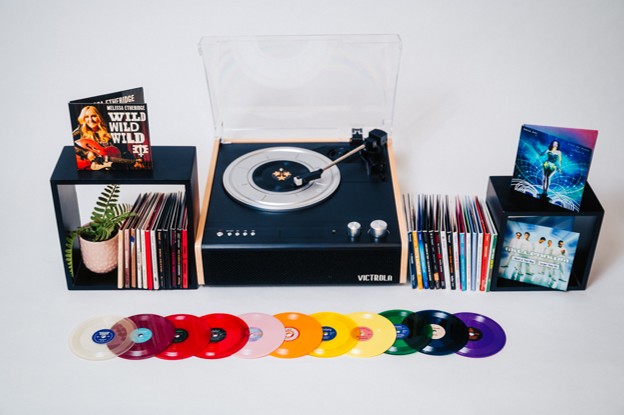
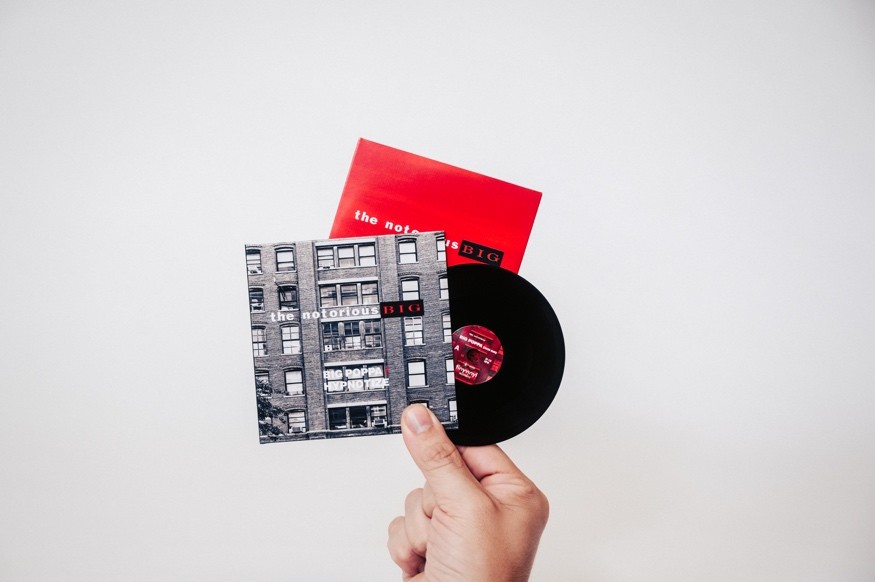
The result was Tiny Vinyl, a miniature collectible disk that plays music on a turntable that serves as a tribute to artists and their fans.

The hardest part of marketing Tiny Vinyls was explaining what it was to potential buyers.

“The convincing that Tiny Vinyl was a real thing instead of a gimmick was the hardest moment of my career,” he said.

To overcome that obstacle, he met with buyers, connected with colleagues and continued to refine his work. His hard work paid off when Target agreed to sell Tiny Vinyls exclusively. The company boomed.

“We printed and shipped our one millionth vinyl,” he related. “Our business is built on rewarding the fans of the artist. That really gives the fans something that they’re excited about.”

Tiny Vinyls is a product that helps preserve the experience of music on vinyls. Michael Houlihan, manager of RECORD STOP in Patchogue, believes that listening to music on vinyl is special.

“I always say it’s an experience,” Houlihan said. “Sometimes there’s lyric sheets inside of the album. You get to take out the vinyl and place it onto the record player. … It’s important to keep physical media alive.”

Photo by Nathan Zucker, courtesy of Tiny Vinyl and ICLS

Despite his success, Kohler remains focused on the future.

“We have ambitious plans for Tiny Vinyl,” he said. “It’s going to be good for Tiny Vinyl as a platform to get broader.”

He explained that he’s in discussion with other retailers to carry the player.

Aside from work, Kohler enjoys exercising, traveling and arranging flowers. When reflecting on his love for gardening, he said: “It’s very relaxing and therapeutic, and I get a lot of satisfaction because it’s authentic to me.”

When he thought about how family and friends would describe him, he gave three words: “playful, curious and adventurous.”

While he now lives in Nashville, Kohler credits Long Island for shaping his outlook.

“I’ve always felt super lucky to have grown up in New York for all the cultural reasons,” he said.

Asked what advice he would give his younger self, Kohler replied: “Younger Neil, don’t be afraid. If you never tried something, you never failed. Failing is normal, not bad. … I just had to learn how to dust myself off and pick myself up.”

Making vacation rentals accessible for disabled travelers

A screenshot of the Becoming rentABLE website founded by Lorraine Woodward.

By Angie Larrea, Hempstead High School
and Gregory Valestin, Brooklyn Technical High School

Because Lorraine Woodward and her two sons have muscular dystrophy, they have always had troubles finding accessible vacation homes. Not wanting other families to experience those same difficulties, Woodward launched a website.

The website, Becoming rentABLE, lists short-term rental homes tailored to people with disabilities. On its website, it describes its goal as creating “a future where accessible short-term rentals are the standard, not the exception.”

“We want everyone to have the opportunity to travel,” said Woodward, 64, of Raleigh, North Carolina.

Muscular dystrophy is a hereditary condition that weakens muscles over time, and Woodward uses a wheelchair.

When she launched her business Becoming rentABLE five years ago, it was intended to make travel easier for people with disabilities by helping them find short-term vacation rentals.

According to the U.S. Centers for Disease Control, 28.7% of the US population has a disability. Despite the passage of the Americans With Disabilities Act in 1990, which mandates hotels to have accessible infrastructure, many rentals in the United States fail to meet the need for disabled tenants. According to a study titled “Enabling people with impairments to use Airbnb” by the Australian researchers Melanie Randle and Sara Dolnicar in the journal Science Direct, “People who use wheelchairs are especially exposed to obstacles, and consequently, are often excluded from experiencing and participating in tourism offerings.”

Becoming rentABLE lists more than 900 properties across the United States and Canada, including two in New York City. The listed homes have 63 different features, such as 36-inch doors, lower light switches, elevated toilets and hard-surface driveways. Woodward said she is expanding her business to accommodate people with hearing and sight loss in addition to cognitive disorders.

“Accessibility is more than wheelchairs,” she said. “We look at needs for people with crutches, walkers and cognitive disabilities like autism, dementia, depression and anxiety.” 

“When you come to our site looking for an accessible place to stay, you identify your needs. They’re all different,” she continued. “You might need a hard‑surface driveway, a short ramp, grab bars in the bathroom or a property with a swimming pool.” 

A common misunderstanding, according to Woodward, is that it costs more to rent a property with accessibility features. “It’s not necessarily more expensive,” she said.

Every home on Becoming rentABLE is verified by a paid team that examines the infrastructure. “I decided not to work alone,” Woodward said. “I brought together volunteers — 21 in total — for the first two years. Now I have paid team members.” 

“It’s not something AI can do,” she said. “A human needs to look at the images submitted and validate what a property owner lists as accessible. Technology helps us organize the information, but verification is manual.” 

Woodward said that there is a critical undersupply of accessible rentals in North America. “The short‑term rental industry also needs to change. Platforms like Vrbo have filters, but they’re vague — ‘wide doors,’ ‘wheelchair accessible.’ What does ‘wide’ mean? Thirty-two inches? Thirty-six?” 

According to Woodward, many people give up and think they can’t travel.

“To create global change, we need industry‑wide filter improvements and better education,” she said.

With reporting by Yasmin Bardales and May Bar

Long Islanders look to beautify their neighborhoods with local campaign

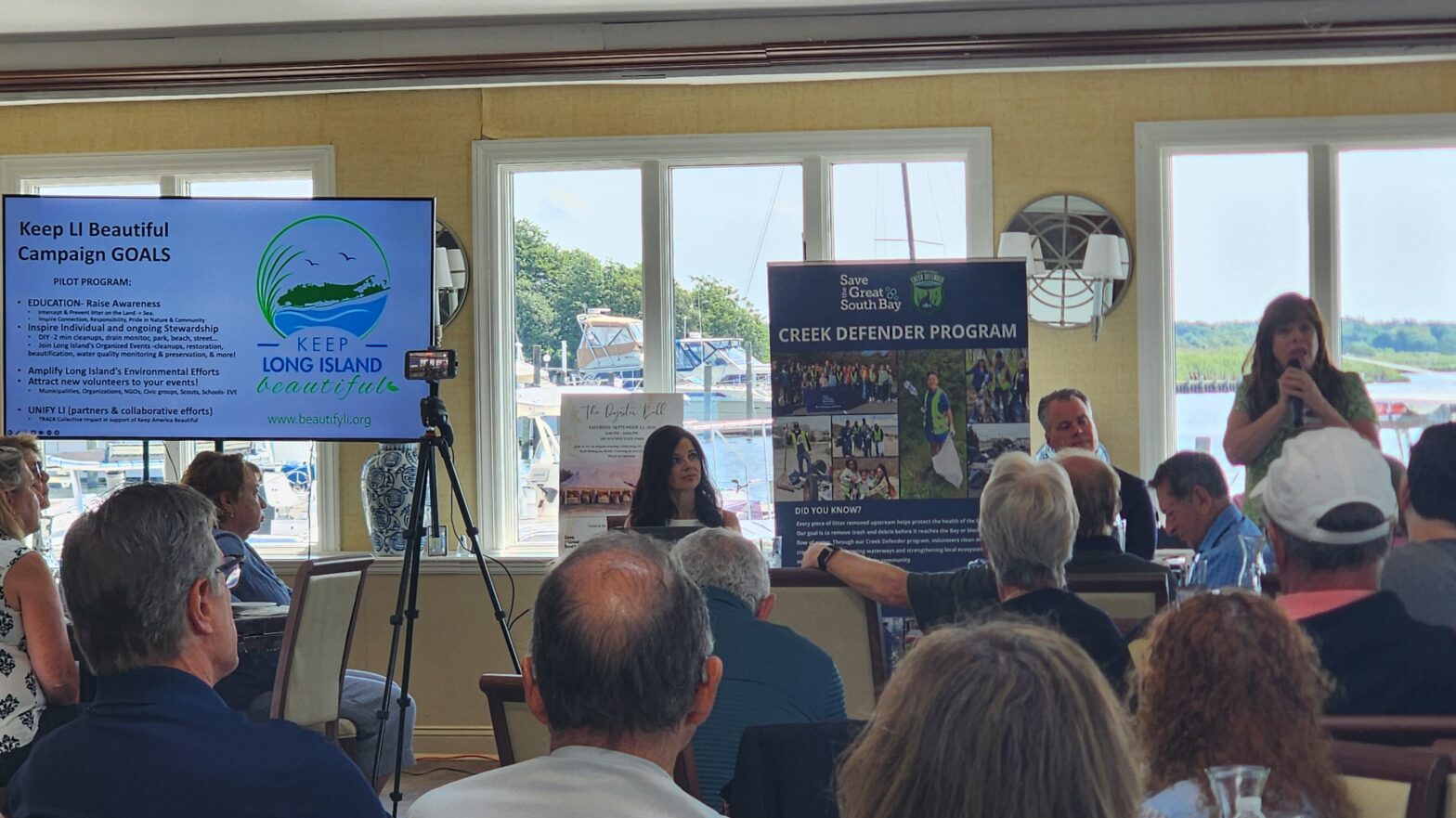
The “Keep Long Island Beautiful” panel hosted by Save the Great South Bay took place July 24 in Oakdale. Photo courtesy of Timothy McArthur

By Isabella Davis, Sacred Heart Academy,
Yennifer Soriano, Hempstead High School,
and Allie Harrison, Ward Melville High School

From its wooded areas to its beautiful sea shores, it’s safe to say nature on Long Island is wonderfully diverse — and worth protecting. From Memorial Day to Labor Day this year, organizations across Long Island are coming together to create the “Keep Long Island Beautiful” campaign. 

Save the Great South Bay, Balloon Mission, Reworld Waste Management, and Long Island South Shore Waterkeepers are the sponsors, and Beautify L.I. hosts the campaign’s website. 

Beautify L.I. is a nonprofit organization founded by Timothy McArthur, who grew up in Islip. After he moved away, he said, he noticed how clean other areas were compared to his hometown. He established Beautify L.I. in 2022 to help rectify the problem. 

“I started to think I could help raise awareness,” he said.

Beautify L.I. interviewed people and organizations, and while it was forming, the “Keep Long Island Beautiful” campaign was beginning to take shape as well. This led McArthur to connect with the executive directors of Save The Great South Bay, Balloon Mission, and Reworld Waste Management.

When asked what the overall goal of Beautify L.I. was, he spoke about a new social aspect for Long Island. “Its goal is to create social transformation in a way that will help us keep Long Island beautiful,” he said. 

Beautify L.I. displays campaign events on its website, including volunteer opportunities for residents of various Long Island communities. 

McArthur said that he created this website so people can learn how to get involved in volunteer work. “We want to drive people there,” he said, offering examples such as beach cleanups, “creek defender” events, or balloon-recycling campaigns.

Save the Great South Bay, another nonprofit group, is dedicated to reviving Long Island’s Great South Bay. The organization hosted a panel discussion in Oakdale on July 24, where it and several other groups shared ideas to protect the environment. 

Cynthia Seibold, founder and executive director of Balloon Mission, brought up the idea of the “Keep Long Island Beautiful” campaign to Robyn Silvestri, the executive director of Save the Great South Bay. At the panel event, organizers tallied how many cleanups had been done for Keep America Beautiful. 

Keep America Beautiful itself is a national nonprofit. Working with volunteers, agencies, and corporate and local partners, the group’s goal is to reduce litter and increase recycling, according to its  website.

Balloon Mission is an organization focused on one particular aspect of litter on Long Island and throughout the country. Seibold, a resident of North Merrick, said over 100 million balloons are intentionally released each year. Additionally, balloons typically have warning labels for being choking hazards for young children. “If they’re a choking hazard for children, they’re a choking hazard for animals,” Seibold said. 

To combat the harm of balloons in the environment, Balloon Mission collects balloons after events in a “pop and drop” system. The balloons from Long Island go to Reworld Waste Management, where they can be used to generate energy. In other parts of the country, Balloon Mission has partnered with TerraCycle, a company that recycles the used balloons.

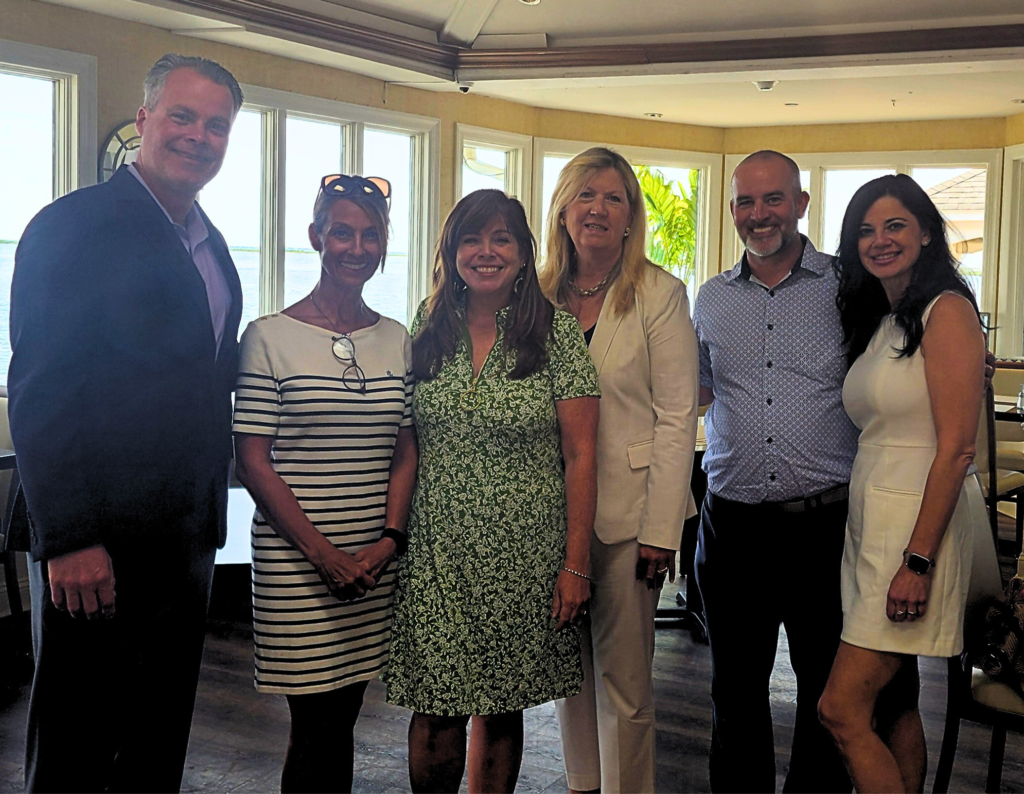
From left, David Wheeler, Robyn Silvestri, Cynthia Seibold, Maureen Early, Timothy McArthur, and Theresa Block took part in the panel discussion hosted by Save the Great South Bay on July 24. Photo courtesy of Timothy McArthur

Researchers use satellites to study what penguins eat

By Heily Sandoval
Northport High School

Do you want to know what a penguin eats?

For a hint, you could ask six researchers who followed satellite images of an Adélie penguin colony across Antarctica going back nearly forty years from outer space. The team has found new information about the penguins’ food web by tracking their guano from space through satellite images.

The six researchers ― Casey Youngflesh, Christian Che-Castaldo, Mathew R. Schwaller, Michael J. Polito, Shawn P. Serbin, and Heather J. Lynch ― peeked at the colony for their article, “Space-based monitoring of penguin diet links sea ice, food webs, and population change.”

Lynch, a quantitative ecologist at Stony Brook University’s Institute for Advanced Computational Sciences (IACS), led the team. She has also conducted other research on penguins using satellites, which in fact, can also be used to study the weather or as communication devices.

The researchers used satellite images to study the colony of Adélie penguins, and their guano, to understand what penguins digest in Antarctica.

Nesting Adélie penguins on Pourquoi Pas Island in Antarctica. Courtesy of Michael Polito/University of California Santa Cruz

The team members “wanted to understand how penguins’ diet varies over space and time and whether that’s important,” Youngflesh, an assistant professor at Clemson University in South Carolina, said in a phone interview. He conducts research in ecology, the study of the natural world.

The researchers found their idea to study penguin colonies and their diets through Schwaller, who has worked for the National Aeronautics and Space Administration (NASA).

Youngflesh said that Schwaller believed researchers could discover that a satellite could help them conduct their studies of penguins and their habitats in Antarctica and could get more information with an overview from space.

“I think it was the ‘90s at some point, [Schwaller] came up with this idea that you could look at penguin colonies from space, based on the color of their guano, their poop,” Youngflesh said. “He’d been thinking about this for a long time, but it wasn’t really until more recently where we had enough subtle information that we were able to actually monitor the entire species range across Antarctica using satellites.”

An Adélie penguin standing on snow on one of the Danger Islands in Antarctica. Courtesy of Michael Polito/University of California Santa Cruz

More than twenty years later, the team members continue to give credit to the satellite images, even though at the time, the satellites were not intended for that research.

“We started this study, raising satellite imagery, getting back to the mid-1980s,” Youngflesh said. “These satellites weren’t created to study penguins. They certainly weren’t created to look at the penguin diet, but we can actually use this in these ways that they were certainly not intended to be used … to do all sorts of cool science and understand how the natural world works.”

To complete their work, the team of researchers used the spectral signature — a way to measure color — of guano to determine what the penguins were eating. The team discovered the penguins were eating krill, which are small shrimp-like creatures, and the guano changed color depending on the krill species.

Most of the researchers watched from space, but Polito, who works for the University of California Santa Cruz, was on the ground among the penguins. He said in a phone interview that he endured chilly winds through his tent and the smell of the guano.

He and his team reached this conclusion in the article: “Rapid environmental change is reshaping Antarctic ecosystems through shifts in temperature and sea ice dynamics, with implications for species such as the iconic Adélie penguin.”

Alexandra Butuc, Christopher Cabrera, and Haru Dukanac contributed to this story.

Behind the lens: My first game as a sports photographer

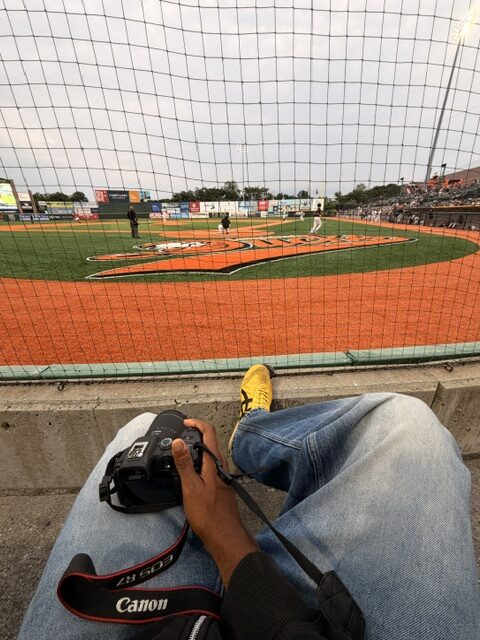
Taking pictures of the Long Island Ducks was one of the moments where I truly felt like a real sports photographer. Standing in the stands with my camera, I wasn’t just taking pictures. I was trying to capture the moments that people in the stands would remember.

One of my favorite moments was capturing the Ducks’ first home run. The energy changed instantly, and I was able to catch the excitement as the player rounded the bases and the crowd reacted. I also captured a player sliding into second base, which was one of those fast moments where you only have a second to get the shot.

What made the experience even better was photographing the crowd. Seeing their reactions, celebrations, and excitement reminded me that sports photography is about more than just the game. It’s about capturing the emotion around it. That night, I really felt like I was doing what I want to do in the future.

Myles Darby

-Myles Darby, Baldwin High School

Broadcasting in a nutshell

By Yasmin Bardales

Today the Greene team tackled broadcasting and all the roles that go into making a successful news broadcast. We were each given the opportunity to try our hand at anchoring, directing, filming, and learning how to use the control room equipment. It was an amazing experience because we learned about what tasks each role performs in order for the show to run smoothly.

Learning how to use the equipment from professionals such as Marcy McGinnis and Connie Conway was a great way to develop a better understanding of broadcasting. McGinnis is a producer who worked her way to the top for over 20 years at CBS News and Conway is an award winning reporter for News 12 Long Island. Meeting veterans of the field was truly an honor for the Greene team.

Stony Brook School of Communication and Journalism’s control room. Photo by Yasmin Bardales

-Yasmin Bardales, Hempstead High School

Long Island Music and Entertainment Hall of Fame hosts ‘Everybody Loves Raymond’ exhibit

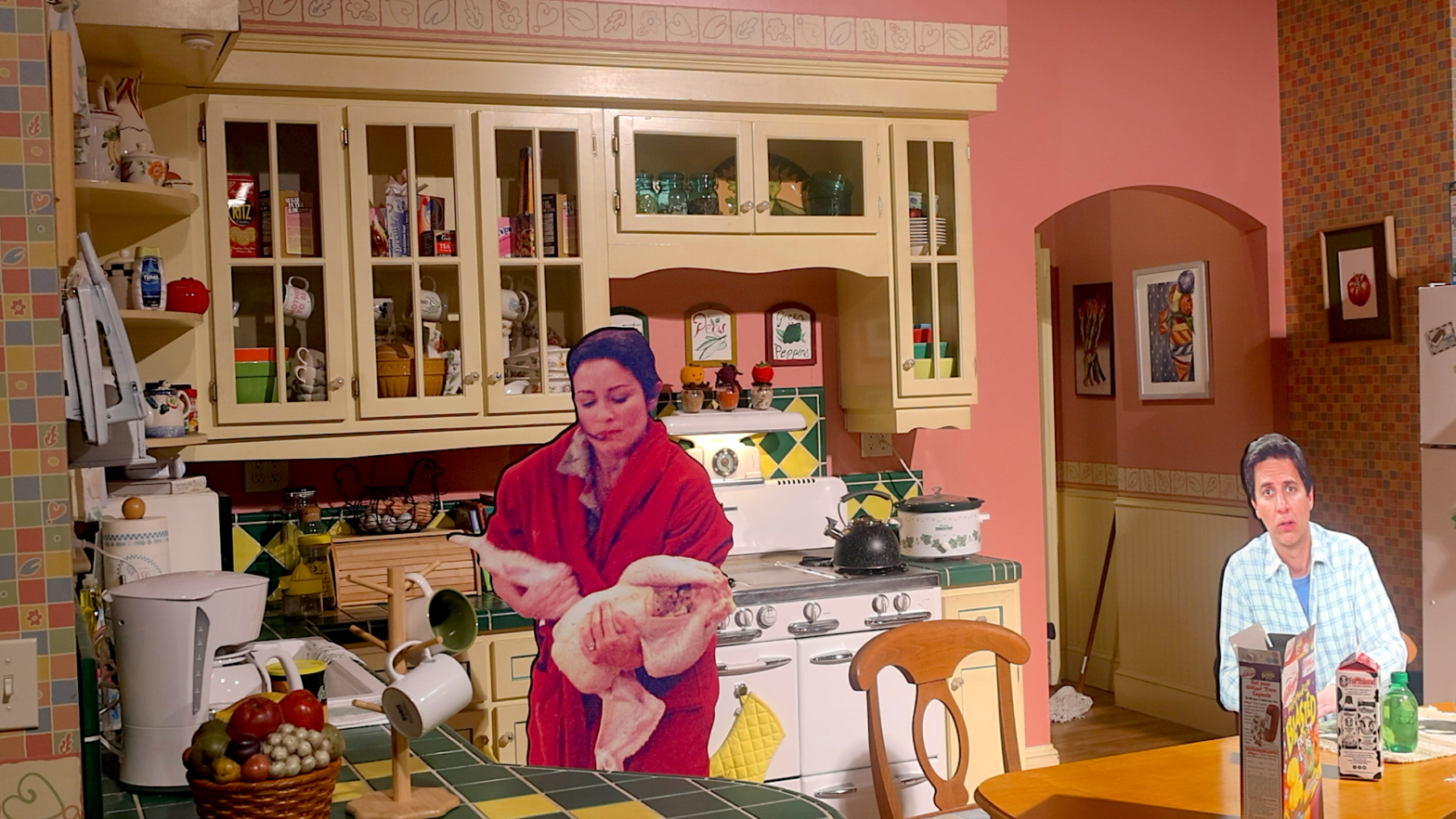
A look into the set of the Barone family’s kitchen. Chris Cabrera/Greene Team, July 29

By Haru Dukanac
Eastchester High School

The Long Island Music and Entertainment Hall of Fame (LIMEHOF) is hosting a limited-time immersive exhibition on the beloved sitcom “Everybody Loves Raymond,” available to see until Labor Day.

“Everybody Loves Raymond” is a comedy series that first aired September 13, 1996, and officially concluded on May 16, 2005, running for nine years. With 210 episodes released throughout nine seasons, the beloved show, which is set in Lynbrook, is celebrating its 30th anniversary.

Visitors do not need to be fans of the show to be fascinated when they walk into this exhibit. Walking in, they are met with multiple displays of iconic costumes and props that were used on the sitcom, quotes from the show on the floor and walls, and the original studio sets of the colorful house of the Barone family. It’s a piece of entertainment history that people can walk into.

Norman Prusslin, a co-founder of the LIMEHOF, gave credit to the curator and designer of the exhibit hall, Kevin O’Callaghan, for the eye-catching interiors that add character to the building.

“I didn’t know what to expect. The Raymond exhibit is like going down a memory lane,” said visitor Diane Ladanza from Jericho. “I found myself laughing and remembering the jokes inside the show.”

Other than the “Everybody Loves Raymond” exhibit, the hall of fame has hosted two past exhibits: an “overview of the venues and the clubs on Long Island that kind of created the Long Island music scene,” as Prusslin described it, and the two-year hit exhibit “Billy Joel – My Life, A Piano Man’s Journey,” which Joel himself cooperated in making.

Upstairs in the LIMEHOF, a room dedicated to Joel’s music career still exists, along with the Hall of Fame Room, where photos of honored music artists, in all kinds of genres like rock and jazz, are displayed on the walls.

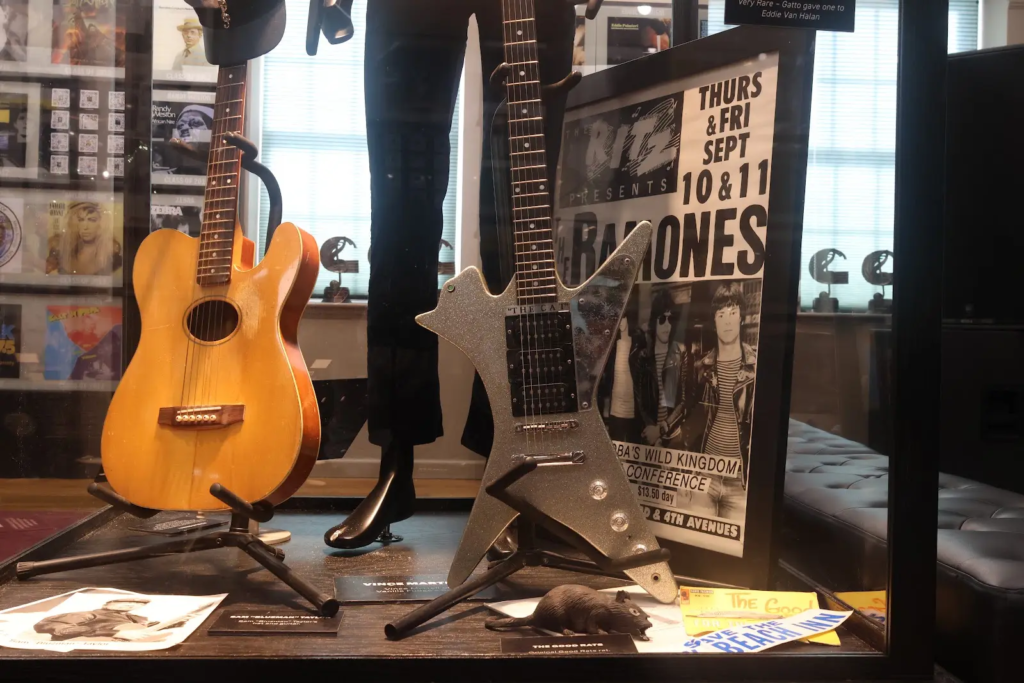
A display of items belonging to or depicting music artists like the Ramones, the Good Rats, and Sam “Bluzman” Taylor. Chris Cabrera/Greene Team, July 29

The LIMEHOF started from a profound appreciation for music and Long Island’s culture. The initial idea for the hall of fame — which was founded in 2004 originally as a mobile museum bus and opened its Stony Brook building in 2022 — came from a deep-rooted love for music that Prusslin has had since he was young.

“I’ve lived through a lot of decades of all kinds of music … but it’s important to me to stay interested in the current bands that are happening now,” Prusslin said.

His reflection on his passion for music and pride for the music community in Long Island led to his idea for the hall of fame.

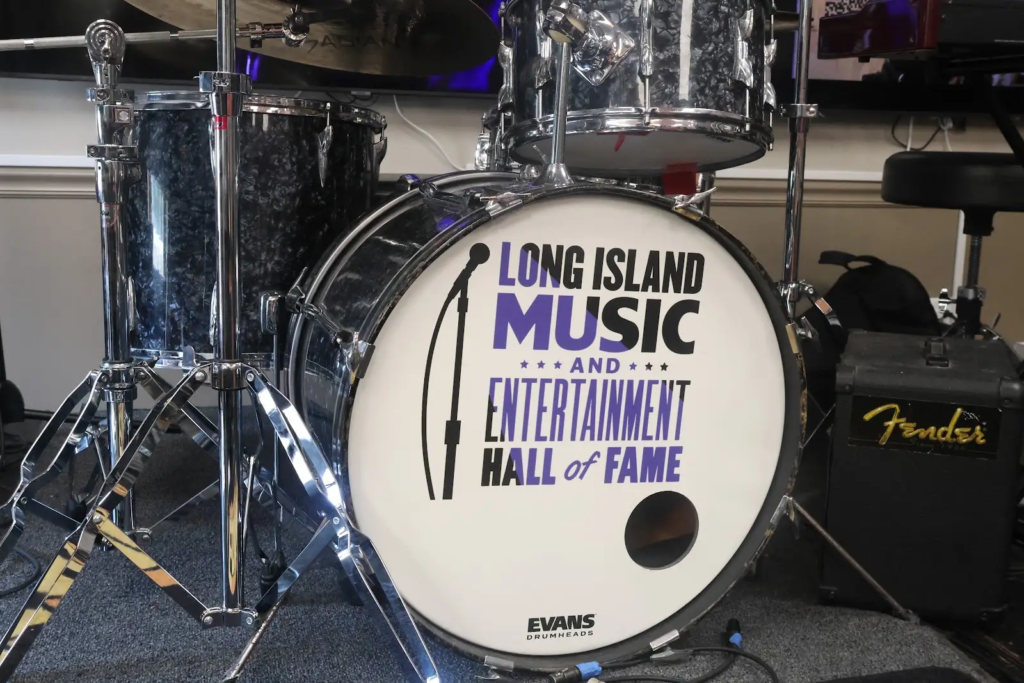
A LIMEHOF drum set. Chris Cabrera/Greene Team, July 29

“I’ve always had a love for music, and Stony Brook has had a long history, for decades, of bringing bands to perform,” Prusslin said. “I always knew that something needed to be done to celebrate the history of Long Island.”

He and Jeffrey James, a board member of the LIMEHOF, also emphasized the importance of Long Island when it comes to music and how many well-known artists have actually come from Long Island, from Billy Joel to the Blue Öyster Cult.

“A lot of what we do here is introducing people to music that they may not necessarily know,” James explained. “Part of our reason for being here is to bring that information to people and to get them to listen to this music and appreciate it.”

Alexandra Butuc, Christopher Cabrera, and Heily Sandoval contributed to this story.

On camera!

At Stony Brook, we visited the news room and control center to practice speaking behind the camera and the effort behind the camera to produce a proper news broadcast.

I was the first person to go up as a weather reporter. Veteran producer Dini Diskin-Zimmerman kept reassuring me and telling me how I was gonna be great on camera. The makeup and hairstylist added powder onto my face to avoid looking oily on camera and brushed the hair out of my face to be able to read the teleprompter efficiently. It was a little difficult to adjust to the movements necessary on the green screen. For example: Learning how to point towards the weather forecast and read from the teleprompter. During the final recording, I was kind of done dirty since there was a delay on the weather display and a blurry camera. But, nonetheless, I’m still grateful for the experience since I had a great time even if the video was rough.

Afterwards, I helped with the graphics in the control room and witnessed the production. I was able to acknowledge the amount of care necessary and even test out some of the functions myself. One member of the crew asked the Greene Team what our favorite part of the experience was: being on camera or behind. In my personal experience, it was beautiful with both sides and educational.

An image of the control room during a practice news show!
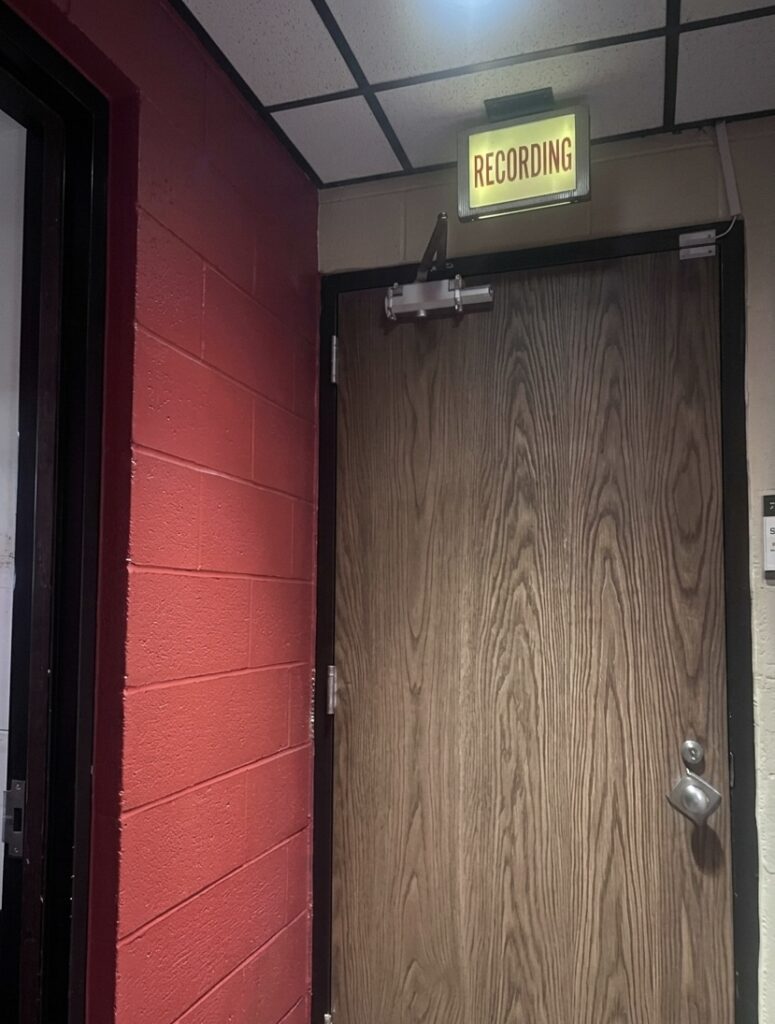
One of the cool doors in the studio
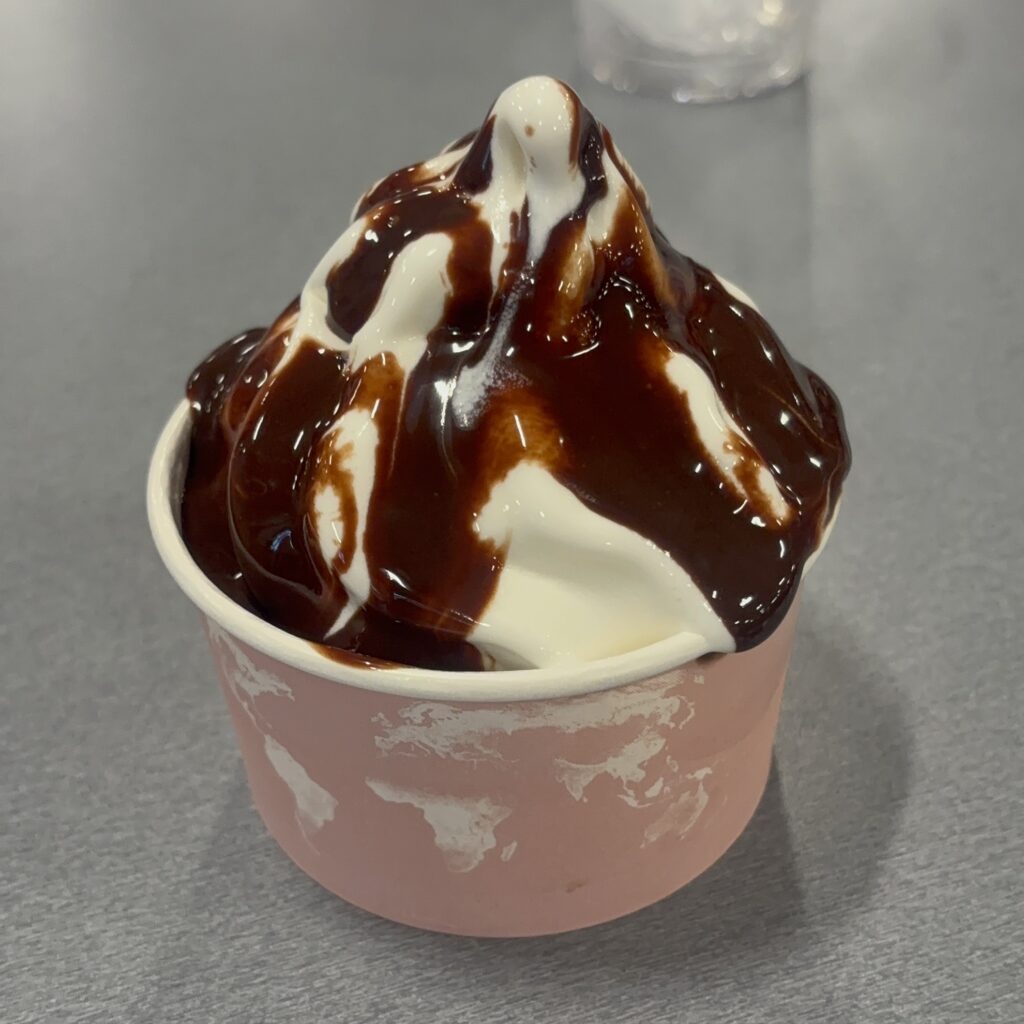
Anddd finally the daily ice cream as a reward for the long, eventful day

-Kayci Guardado, Central Islip High School

Day 4-going live

Day 4 started with a slightly late start, as the previous night was the very late Ducks game. We started with the usual pep talks and lectures but soon enough we moved to a separate studio and started our own news recording. I started on the buttons that control what goes live and got the hang of what they do while watching. Then I was on camera, which was my favorite. Then I had to go in front of the camera, which I did not like at all. My team then went on an interview with the co-founder of Tiny Vinyl and got the information we needed to start. For our Ducks project my teammates started on the script and I went through and started to edit our clips. Today went by quickly and the program is almost over. I’m not sure we’ll finish everything but we’ll do our best.

-Parker Silberman, Longwood High School